




















Filter by region, bedrooms and budget — direct-to-developer pricing in USD.
All properties→Search by name, filter by project count, and read full developer profiles.
All developers→Find the right area by budget, lifestyle and expected rental yield.
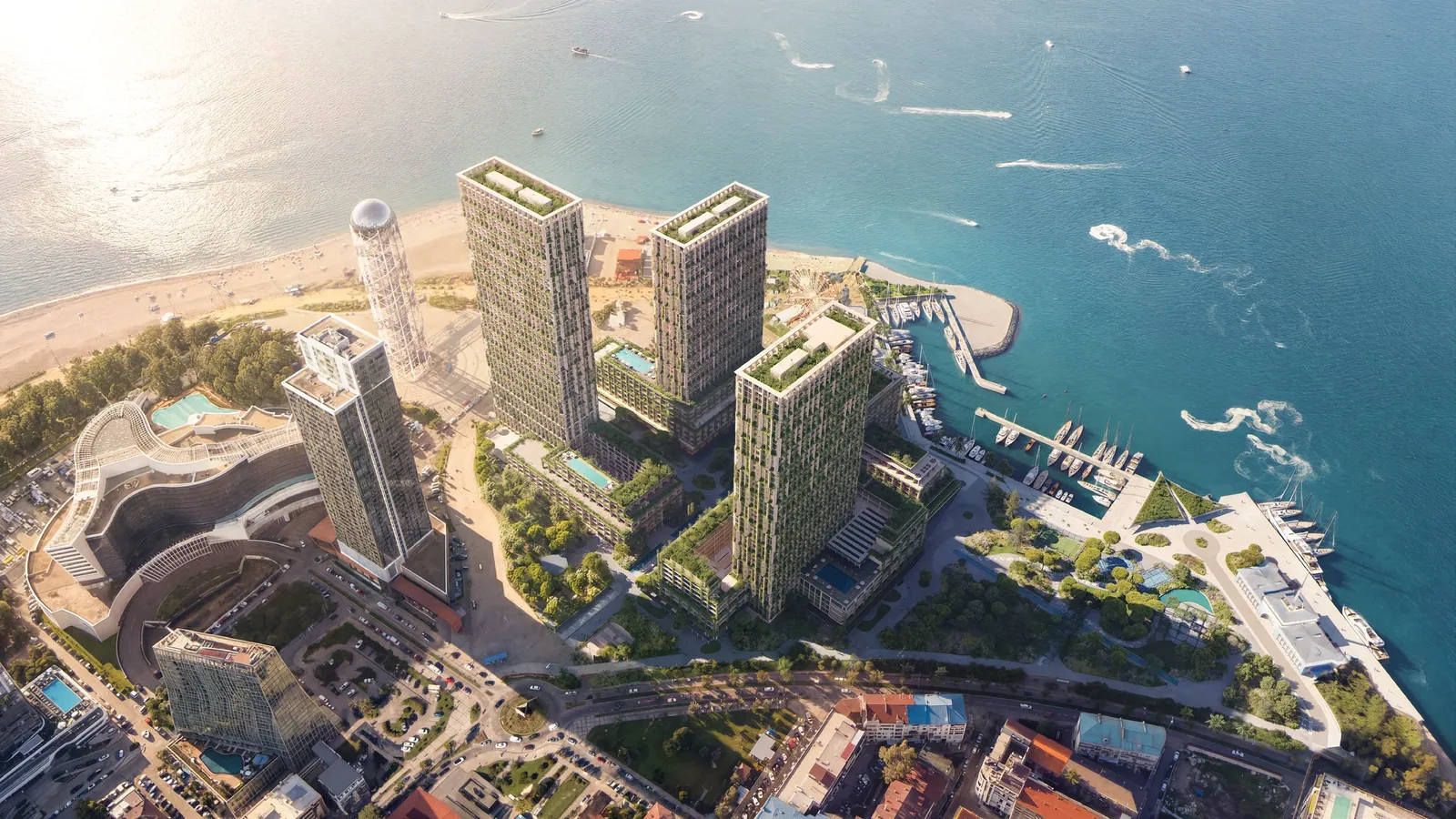
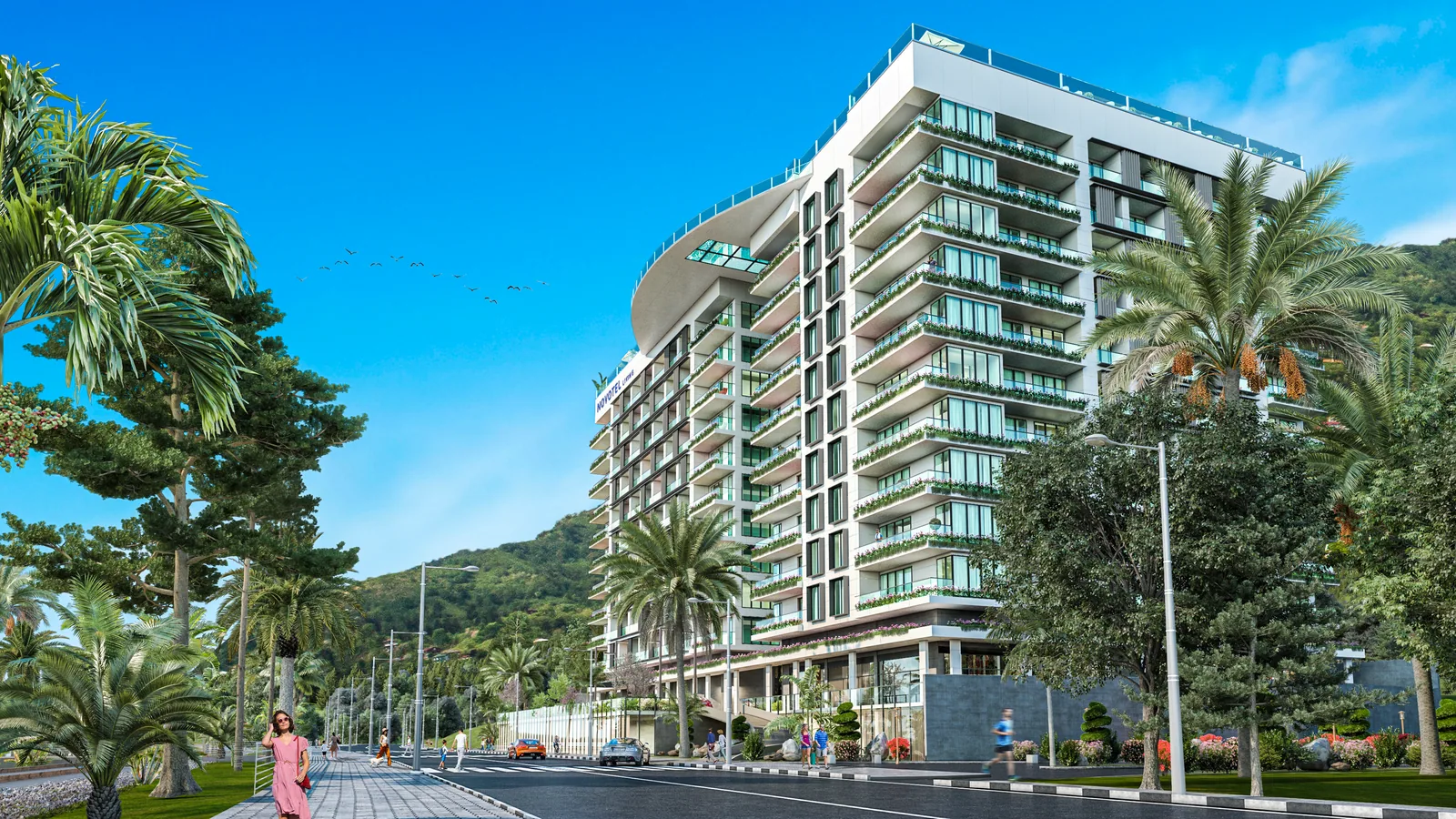
All areas→Batumi is the seaside capital of Adjara and Georgia's leading resort city, a fast-growing strip of the Black Sea coast where palm-lined boulevards, a historic Old Town and a wall of new towers meet the beach. The city drew around 2.6 million international visitors in 2025 — Georgia's second-most-visited destination after Tbilisi — and that tourism flow underpins one of the region's most active short-let markets. For foreign buyers the appeal is unusually direct: Georgia grants 100% freehold ownership of apartments to any nationality, with no residency requirement to purchase, title registered in a day or two, and a 5% flat tax on residential rental income. Branded beachfront supply — Radisson, Wyndham and similar hospitality-managed residences along the Gonio first line — is still limited, and a qualifying purchase from USD 150,000 opens a renewable residence permit. Off-plan turnkey homes start well under USD 100,000.
Batumi runs along the Black Sea coast on the S2 international coastal highway, which threads south through Gonio toward the Sarpi border with Turkey and north through Kobuleti toward Poti. Batumi International Airport sits just south of the centre, roughly 15 minutes from the city and a short hop from the Gonio first line — close enough that the airport district itself has become a buy-to-let corridor.
Batumi is a fast-growing resort market rather than a mature one. Turnkey apartment prices averaged around USD 1,865 per m² across 2025 (Galt & Taggart), up about 9% year-on-year and roughly 19% over two years from USD 1,569/m² in 2023; TBC Capital's broader all-types index put the average nearer USD 1,395/m², also rising sharply. The premium Old Batumi submarket exceeds USD 3,000/m², while first-line seafront stock generally trades above USD 2,000/m² and peripheral districts sit below USD 1,500/m². The market is liquid — around 17,478 apartments sold in 2025, up roughly 15% year-on-year — though developer inventory has also grown, so finish quality and location matter. The investment case is rental: TBC Capital estimated a gross yield near 7.2% for 2025, and professionally managed short-let units on the beachfront can run higher in the June–August peak, when Batumi's tourism flow concentrates. Note that yield is seasonal — Batumi's humid-subtropical climate makes summer the earner and the off-season far quieter. Georgia levies a flat 5% tax on residential rental income, 0% capital-gains tax after two years of ownership (5% if sold sooner), and no annual property tax for owners below the income threshold. Figures are market-sourced and subject to change; no full-year 2026 price has been published yet.
Live from the catalog — sorted cheapest first.
Yes — Georgia is one of the most open property markets for foreigners. A buyer of any nationality can own an apartment or building outright (100% freehold), on the same legal footing as a Georgian citizen, with the right to live in it, rent it, sell it and pass it on. No residency, citizenship, local company or local bank account is required to purchase, and title is registered with the National Agency of Public Registry — typically within one to two business days. The only restriction is agricultural land, which foreign individuals cannot own directly; apartments and buildings in Batumi are unaffected.
Gross yields run around 7% on a blended basis — TBC Capital estimated roughly 7.2% for 2025. Well-located beachfront and first-line apartments tend to sit at the higher end, and professionally managed short-term lets can exceed that during the peak season. The critical caveat is seasonality: Batumi is a summer resort, so short-let income concentrates in June to August and falls away in the off-season — the headline figures reflect the full year, not a flat monthly return. Agency marketing sometimes quotes 15–25% on prime sea-view units; treat those as optimistic peak-season scenarios rather than dependable annual yields, and budget for management and vacancy.
Turnkey apartments averaged around USD 1,865 per m² in 2025 (Galt & Taggart), up roughly 9% year-on-year, while TBC Capital's broader all-stages index sat nearer USD 1,395/m² — the gap reflects different methodologies (move-in-ready versus all property types). The premium Old Batumi core exceeds USD 3,000/m², first-line seafront stock generally trades above USD 2,000/m², and outer districts fall below USD 1,500/m². Prices have risen about 19% over two years on the turnkey series; a full-year 2026 figure has not yet been published.
Entry starts from around USD 49,000 across the Batumi projects on Palmera — a turnkey or white-box studio in the Airport District — with first-line Gonio beachfront and premium Old-Town stock running well into the hundreds of thousands. The spread reflects the difference between an affordable buy-to-let unit away from the water and a branded, hospitality-managed residence directly on the beach. Most projects are off-plan with developer payment plans, so the cash outlay is staged across construction.
Yes — a qualifying real-estate purchase opens a renewable residence permit. As of 1 March 2026 the minimum investment is USD 150,000 in non-agricultural property (raised from the longstanding USD 100,000 threshold), assessed on an accredited valuation. It grants a renewable temporary residence permit, with a spouse and minor children able to qualify under the same investment, and is tied to continued ownership. A larger investment route (from around USD 300,000) leads to a longer permit and a faster path to permanent residence. This is a residence permit, not citizenship — confirm the current rules and your property's valuation before relying on a specific outcome.
Georgia is a light-tax jurisdiction for property owners. Residential rental income earned by an individual is taxed at a flat 5% with no deductions (20% if the property is let to a company). Capital gains are exempt after two years of ownership, and taxed at 5% on the gain if sold sooner. There is no annual property tax for owners whose household income falls below the statutory threshold; above it, municipalities levy a small annual charge of roughly 0.05–1% of value. Transaction costs are low and title transfer is fast. Always confirm the current rates and thresholds with a Georgian tax adviser for your situation.
Batumi is primarily a seasonal resort market. Its humid-subtropical climate delivers warm, busy summers and mild, rainy winters, and the tourism that drives short-let demand peaks sharply from June to August. That makes summer the income engine — well-managed beachfront units can perform strongly in season — but it also means occupancy and nightly rates fall in the off-months. Investors who want even, 12-month rental demand often pair a Batumi holiday-let with a long-let apartment in Tbilisi, the capital, where demand is year-round.
It depends on the strategy. First Line, Gonio — the beachfront strip south of the city — carries the branded, hospitality-managed residences (Radisson, Wyndham and similar) and the strongest short-let story, with limited supply at that standard. The Old Town is the premium, year-round core, scarce and the most expensive per m². The Botanical Garden frontage offers a protected, lower-density setting; the City Center keeps tenants through the year on the boulevard; and the Airport District and nearby Kobuleti (a pine-backed resort town to the north) are the value entry points for buy-to-let. Each is a sub-area of Batumi rather than a separate market — the choice is about price, season and rental model.
Signed-in users see all their conversations on any device — site and investor portal.
Ask me about Batumi