
























Living in Muscat: A Guide to Safety, Schools and Cost of Living for Expats and Investors
Muscat is the safest, highest-quality-of-life capital in the Gulf — ranked the world’s #8 safest city and #1 for quality of life across the GCC and Western Asia — and it pairs that lifestyle with the lowest property entry prices in the region. For anyone weighing a move or an investment, that combination is the whole story: a calm, family-friendly city where roughly 936,000 expatriates already live and rent, sitting on top of homes that cost a fraction of what comparable Gulf capitals charge.
Palmera is a RERA-licensed brokerage (license 40780) with 0% buyer commission, now covering Oman alongside the UAE. You can browse Oman property or dig into the numbers at the Oman market data hub — but first, here’s what living in Muscat actually looks like, and why it underpins the investment case set out in our guide on why invest in Oman.
At a glance
| Metric | Muscat |
|---|---|
| Global safety rank | #8 safest of 382 cities |
| Quality of life | #1 in GCC & Western Asia; #4 globally |
| Expatriate population | ~936,000 in Muscat governorate |
| Cost of living | Lower than Dubai, Abu Dhabi or Doha |
| International schools | British, American, Indian & IB curricula |
| Property entry price | 750–1,150 AED / sq ft (among the Gulf’s lowest) |
| Rental yield | 8–10% gross (7–9% net) |
| Property taxes | 0% capital-gains, 0% annual property tax |
A capital built around safety
Muscat ranks #8 safest of 382 cities worldwide on the Numbeo Safety Index 2025 — ahead of every other Gulf capital and most of Europe. That statistic matches the lived experience of the city: low crime, quiet residential districts, and a culture in which families walk the corniche and children play outdoors after dark without a second thought.
For an investor, safety is not a soft metric. It is what keeps expatriate families settled in multi-year leases and what keeps rental demand steady and vacancy low. Tenants who feel secure stay put, renew, and treat a rented home as a long-term base rather than a stopover.
Verified: Muscat is the #8 safest city of 382 ranked worldwide.
The Gulf’s best quality of life
On the Numbeo Quality of Life Index 2025, Muscat ranks #1 in the GCC and Western Asia — and #4 in the world — ahead of Qatar, the UAE and Saudi Arabia. The score reflects the everyday texture of the city: clean air, light traffic by regional standards, a dramatic coastline backed by the Hajar mountains, and an unhurried pace that stands apart from the density of larger Gulf hubs.
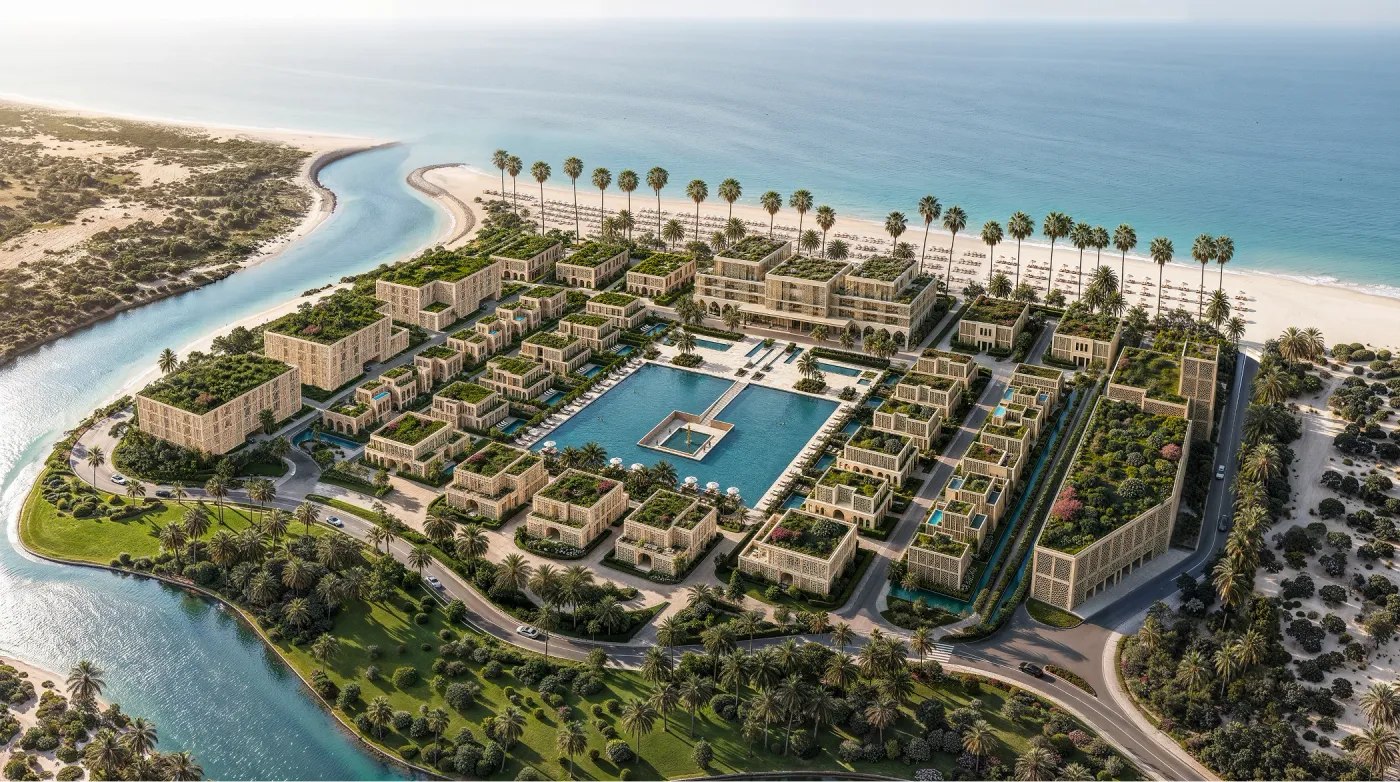
This is a city people choose for how it feels to live in, not only for what it costs. Muscat’s low-rise skyline, protected coastline and relaxed rhythm give it a distinct identity — a place where the outdoors is part of daily life rather than something you escape the city to find.
Cost of living: lower than Dubai, Abu Dhabi or Doha
Everyday costs in Muscat run below Dubai, Abu Dhabi and Doha — from rent and groceries to schooling and utilities. For expatriate households, that translates directly into higher disposable income and a lower breakeven on any relocation.
The property gap is the sharpest of all. Prime Muscat homes start at 750–1,150 AED per square foot, among the lowest entry prices anywhere in the Gulf. Oman also levies 0% capital-gains tax and 0% annual property tax; the only frictional costs are 5% VAT and a one-off 3% registration fee. For a resident-buyer, that means a home in a top-ranked capital priced well below Dubai’s, with no annual tax drag on the asset.
Verified: prime Muscat entry pricing is 750–1,150 AED per sq ft — among the lowest in the Gulf.
Schools and family life
Muscat offers a full spread of international schools — British, American, Indian and IB curricula — which is one of the main reasons expatriate families relocate to the capital and, crucially, stay. School choice is often the single biggest factor in whether a family treats a Gulf posting as a two-year contract or a decade-long home.
That stickiness matters to landlords. Family tenants anchored to a school run are the least likely to move, giving residential landlords in the right neighbourhoods some of the most durable occupancy in the region. A city that keeps families keeps its rental market full.
The expat tenant base
This is where lifestyle becomes an investment thesis. Around 936,000 of Muscat governorate’s 1.53 million residents are expatriates — the core rental tenant base, and the group most likely to rent rather than buy.
That base is growing. Oman’s population has climbed from 4.09 million in 2014 to 5.36 million in 2025 — up roughly 31% — while Muscat governorate grew 2.2% year on year. More people, a rising share of whom are working expatriates, is precisely the demand backdrop a landlord wants to see.
The result shows up in the yields. Muscat delivers gross rental yields of 8–10%, with net yields of 7–9% — well ahead of most mature Gulf markets. Safety, schools and quality of life are what fill those units; the yields are what they pay for.
Verified: ~936,000 expatriates in Muscat form the tenant base behind 8–10% gross yields.
Getting around and staying connected
Muscat is a coastal, low-rise city stretched along the Gulf of Oman, linked by modern expressways and served by Muscat International Airport, a well-connected regional and long-haul hub. Day to day, it is an easy city to drive: distances are manageable and congestion is mild by Gulf standards.
Connectivity is set to improve further. Hafeet Rail — a 238-kilometre cross-border line — will link Sohar in northern Oman to Abu Dhabi in about 1 hour 40 minutes, with completion expected 2028–2030. It tightens Oman’s integration with the wider UAE economy — a long-term tailwind for northern real-estate demand.
If you decide to stay
Buying property in Muscat can also open the door to residency. Under Royal Decree 38/2025, non-Omani buyers at Knowledge Oasis Muscat and designated zones — together with their immediate family — are granted residency. A 2-year renewable investor visa applies on completed payments with no minimum threshold, and a 10-year Golden Visa is available for investments of OMR 200,000+ (about USD 520,000).
That makes Muscat unusual among lifestyle destinations: the same purchase that buys you a home in the Gulf’s #1 quality-of-life capital can also secure your right to live there. If you are weighing it against the region’s most established market, our Oman vs Dubai property comparison puts the two side by side on price, yield, fees and lifestyle. When you’re ready, browse Oman property or explore the full picture at the Oman market data hub.
Frequently asked questions
Is Muscat safe for expats and families?
Yes. Muscat ranks #8 safest of 382 cities worldwide on the Numbeo Safety Index 2025 and #1 for quality of life across the GCC and Western Asia — safer than every other Gulf capital, with low crime and walkable neighbourhoods.
Is Muscat cheaper to live in than Dubai?
Overall, yes. Everyday costs in Muscat run below Dubai, Abu Dhabi and Doha, and the property gap is the sharpest: prime Muscat homes start at 750–1,150 AED per sq ft, among the lowest entry prices in the Gulf.
Are there good international schools in Muscat?
Yes. Muscat offers a full range of international schools spanning British, American, Indian and IB curricula, which is a major reason expatriate families relocate to the capital and stay long-term.
How large is the expatriate community in Muscat?
Around 936,000 of Muscat governorate’s 1.53 million residents are expatriates. This is the core rental tenant base, sustained by national population growth from 4.09M in 2014 to 5.36M in 2025 (up roughly 31%).
What rental yields can landlords expect in Muscat?
Gross rental yields in Muscat run 8–10% annually, with net yields of 7–9% — supported by 0% capital-gains tax and 0% annual property tax.
Can living in or buying property in Muscat lead to residency?
Yes. Under Royal Decree 38/2025, non-Omani buyers at Knowledge Oasis Muscat and designated zones — plus immediate family — are granted residency. A 2-year renewable investor visa applies on completed payments, and a 10-year Golden Visa is available for investments of OMR 200,000+ (about USD 520,000).
Frequently asked questions
Is Muscat safe for expats and families?
Yes. Muscat ranks #8 safest of 382 cities worldwide on the Numbeo Safety Index 2025 and #1 for quality of life across the GCC and Western Asia — safer than every other Gulf capital, with low crime and walkable neighbourhoods.
Is Muscat cheaper to live in than Dubai?
Overall, yes. Everyday costs in Muscat run below Dubai, Abu Dhabi and Doha, and the property gap is the sharpest: prime Muscat homes start at 750–1,150 AED per sq ft, among the lowest entry prices in the Gulf.
Are there good international schools in Muscat?
Yes. Muscat offers a full range of international schools spanning British, American, Indian and IB curricula, which is a major reason expatriate families relocate to the capital and stay long-term.
How large is the expatriate community in Muscat?
Around 936,000 of Muscat governorate's 1.53 million residents are expatriates. This is the core rental tenant base, sustained by national population growth from 4.09M in 2014 to 5.36M in 2025 (up roughly 31%).
What rental yields can landlords expect in Muscat?
Gross rental yields in Muscat run 8–10% annually, with net yields of 7–9% — supported by 0% capital-gains tax and 0% annual property tax.
Can living in or buying property in Muscat lead to residency?
Yes. Under Royal Decree 38/2025, non-Omani buyers at Knowledge Oasis Muscat and designated zones — plus immediate family — are granted residency. A 2-year renewable investor visa applies on completed payments, and a 10-year Golden Visa is available for investments of OMR 200,000+ (about USD 520,000).
Sources · last updated 6 August 2026
- Numbeo Safety & Quality of Life Index 2025 — Muscat safety and QoL rankings · 2026-08-06
- NCSI (National Centre for Statistics & Information), Oman — population and expatriate figures · 2026-08-06
- Savills / National Bank of Oman — Muscat rental yields · 2026-08-06
- Royal Decree 38/2025, Official Gazette — residency and freehold for non-Omanis · 2026-08-06