





















Où investir en Géorgie en 2026 : les meilleurs quartiers de Batumi et Tbilissi


La Géorgie s'est discrètement imposée comme l'un des marchés immobiliers les plus prisés aux portes de l'Europe : des prix d'entrée accessibles, un registre foncier rapide et entièrement dématérialisé, et une économie touristique qui ne cesse de battre des records. Pourtant, la « Géorgie » ne constitue pas un marché unique. Le profil d'investissement à Batumi, sur la côte, est fondamentalement différent de celui de la capitale, Tbilissi, et au sein de chaque ville, le choix du bon quartier peut faire toute la différence pour vos rendements.
Ce guide cartographie le pays ville par ville et quartier par quartier, en s'appuyant sur les chiffres publiés par des cabinets de recherche reconnus — Galt & Taggart, TBC Capital et Colliers — plutôt que sur les arguments marketing des promoteurs. Les chiffres clés sont éloquents : selon Galt & Taggart, le prix moyen sur le marché primaire à Batumi a atteint $1,865/m² en 2025, en hausse de 9.4% sur un an, tandis que Colliers estime la moyenne combinée Tbilissi-Batumi à environ $1,500/m², sans baisse de prix attendue en 2026.
Autre fait déterminant concernant Batumi : Galt & Taggart rapporte qu'environ 77% des appartements à Batumi ont été achetés par des étrangers en 2025. Il s'agit donc d'un marché de la location saisonnière porté par la demande internationale, ce qui explique pourquoi le choix de l'emplacement est si crucial. Voici notre analyse détaillée des meilleurs endroits où investir et du profil d'investisseur adapté à chaque zone.
Sommaire
- Batumi vs Tbilissi : deux profils d'investissement distincts
- Front de mer de Batumi & New Boulevard : le cœur de la location saisonnière
- Gonio : la nouvelle frontière du front de mer avec résidences de marque
- Kobuleti : l'alternative côtière plus accessible
- Tbilissi Prime : Vake, Vera et le centre-ville
- Tbilissi valeur sûre & demande locative : Saburtalo et au-delà
- L'effet méga-projet en bord de rivière : Tbilisi Waterfront
- Aligner le quartier sur votre stratégie
Batumi vs Tbilissi : deux profils d'investissement radicalement différents
Avant de choisir une rue, choisissez une ville — car Batumi et Tbilissi récompensent des stratégies opposées. Batumi est une station balnéaire de la mer Noire dont la demande immobilière est massivement tirée par le tourisme et les acheteurs étrangers. Tbilissi est une capitale vivante toute l'année, dotée d'une base de locataires locaux, d'une économie de services plus développée et d'une demande plus stable et moins saisonnière.
Les données de prix reflètent cette réalité. À Batumi, les cabinets de recherche utilisent des échantillons différents et publient donc des chiffres clés distincts : Galt & Taggart cite un prix moyen sur le marché primaire de $1,865/m² pour 2025, tandis que TBC Capital — mesurant un échantillon différent — rapporte que les prix à Batumi ont augmenté de 17% en 2025 pour atteindre environ $1,395/m², avec un appartement d'une chambre en centre-ville autour de $1,493/m² en janvier 2026. Considérez ces données comme deux angles de lecture d'une même tendance haussière plutôt que comme une contradiction. Colliers, adoptant une vue combinée des deux villes, arrive à environ $1,500/m² et n'anticipe aucune baisse des prix en 2026.
| Angle de lecture du marché | Source | Niveau de prix indiqué |
|---|---|---|
| Marché primaire de Batumi (2025) | Galt & Taggart | $1,865/m² (+9.4% sur un an) |
| Vieux Batumi (sous-marché le plus cher) | Galt & Taggart | $3,028/m² |
| Batumi (échantillon alternatif, 2025) | TBC Capital | ~$1,395/m² (+17% sur un an) |
| Batumi centre 1 chambre (janv. 2026) | TBC Capital | ~$1,493/m² |
| Moyenne combinée Tbilissi & Batumi | Colliers | ~$1,500/m² |
La conclusion pratique : si vous recherchez un fort potentiel de rendement en location saisonnière pendant la haute saison et que la saisonnalité ne vous dérange pas, la côte de Batumi est votre terrain de jeu. Si vous préférez une occupation plus stable toute l'année et un bassin de locataires locaux sur lequel vous appuyer, Tbilissi représente un investissement plus défensif. De nombreux investisseurs disposant d'un capital suffisant finissent par détenir un bien dans chacune de ces villes.
Front de mer de Batumi & New Boulevard : le cœur de la location saisonnière
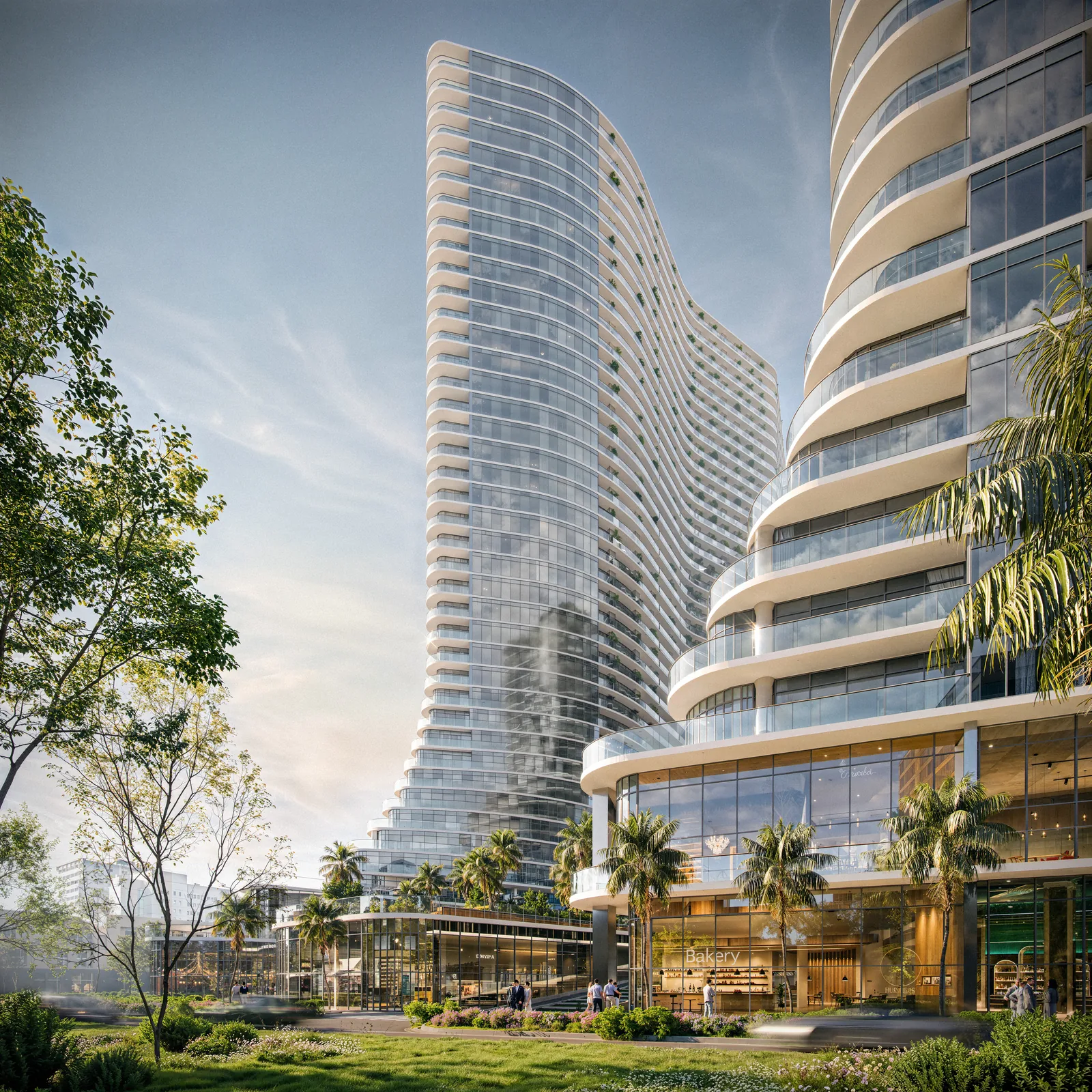
La bande du front de mer de Batumi — la zone le long et en arrière du New Boulevard — est le moteur de l'économie de la location courte durée dans la ville. C'est là que se concentrent les vues sur la mer, l'affluence touristique et les tours de standing avec marque, ce qui en fait le choix le plus éprouvé pour une stratégie de type Airbnb.
Les prix ici s'étendent sur une large fourchette. Au sommet, Galt & Taggart identifie le Vieux Batumi comme le sous-marché le plus cher à $3,028/m², reflétant son caractère patrimonial et sa proximité avec la mer. Les tours plus récentes le long du boulevard se situent généralement en dessous de ce niveau, plus proches de la moyenne du marché primaire à l'échelle de la ville. Puisqu'environ 77% des acheteurs à Batumi en 2025 étaient des étrangers (Galt & Taggart), la liquidité de la revente dans cette zone est étroitement liée à la demande internationale — un atout les bonnes années et un point à surveiller lors des périodes plus calmes.
- Idéal pour : les investisseurs privilégiant les revenus de la location courte durée/saisonnière et l'attractivité à la revente des biens avec vue sur mer.
- À surveiller : les revenus à Batumi sont concentrés sur l'été, modélisez donc l'occupation de manière conservatrice plutôt que de vous baser uniquement sur le mois d'août.
- Prix d'entrée : milieu de gamme selon la moyenne de la ville ; premium pour les véritables vues sur mer et les adresses du Vieux Batumi.
Vous pouvez consulter les options actuelles en front de mer et dans le centre de Batumi sur les annonces immobilières en Géorgie de Palmera.
Gonio : la nouvelle frontière du front de mer avec résidences de marque
Au sud de Batumi, Gonio s'est imposé comme le pôle principal des développements de front de mer avec résidences de marque. C'est là que les grandes enseignes internationales de l'hôtellerie plantent leur drapeau : la zone accueille des projets associés à Radisson Blu, Eagle Hills et Wyndham Grand Gonio. Eagle Hills, le promoteur d'Abou Dabi à l'origine de plusieurs méga-projets en Géorgie, a positionné Gonio Yachts & Marina comme un projet côtier emblématique.
L'attrait de Gonio réside dans son alliance d'un front de mer ininterrompu et de l'infrastructure opérationnelle des résidences de marque — gestion hôtelière, équipements et nom reconnu — ce qui peut soutenir un modèle locatif clé en main axé sur l'hôtellerie. Pour les investisseurs qui recherchent un produit géré plutôt qu'un appartement à gérer eux-mêmes, c'est l'offre de résidences de marque la plus concentrée de la région de Batumi. Deux projets Palmera se situent précisément dans cette zone : Gonio Yachts & Marina par Eagle Hills et le Radisson Blu Resort & Residences à Gonio.
- Idéal pour : les acheteurs recherchant un front de mer avec résidences de marque gérées par un hôtel et un opérateur reconnu.
- À surveiller : les calendriers de livraison des nouveaux lancements à Gonio peuvent évoluer — confirmez les dates d'achèvement et les conditions du programme locatif par écrit avant de vous engager.
Kobuleti : l'alternative côtière plus accessible
À environ 30 kilomètres au nord le long de la côte depuis Batumi, Kobuleti est le cousin plus abordable de la station principale — une ville balnéaire plus calme et plus économique qui séduit les investisseurs recherchant une adresse sur la mer Noire avec un budget inférieur à celui du centre de Batumi. Elle attire une clientèle de vacanciers plus locale et régionale, et s'avère encore plus saisonnière que Batumi même.
Nous serons transparents à ce sujet : des données chiffrées précises et actualisées au mètre carré spécifiques à Kobuleti n'étaient pas disponibles dans les recherches sous-tendant ce guide, nous ne donnerons donc pas de chiffre exact. En règle générale, Kobuleti se négocie en dessous de la moyenne du marché primaire de Batumi, que Galt & Taggart a fixée à $1,865/m² en 2025. Considérez Kobuleti comme une option côtière plus accessible mais à forte saisonnalité, et vérifiez les prix actuels projet par projet avant d'acheter.
- Idéal pour : un investissement côtier à budget réduit et les acheteurs à l'aise avec une saisonnalité marquée.
- À surveiller : une demande à l'année plus faible qu'à Batumi ; confirmez la liquidité de sortie et la disponibilité de la gestion sur place.
Tbilissi Prime : Vake, Vera et le centre-ville
Dans la capitale, la carte des quartiers prestigieux est dominée par Vake — depuis longtemps le quartier le plus prisé de Tbilissi — aux côtés du verdoyant Vera et du centre-ville. Selon les données de Tbilisi-Property pour février 2026, Vake affiche les loyers au mètre carré les plus élevés de la ville, autour de $13.8/m², suivi par Mtatsminda à $11.7/m² et Saburtalo à $11.7/m². En termes de prix d'achat, les quartiers prestigieux se situent dans la fourchette d'environ $1,800–$2,500/m².
| Quartier de Tbilissi | Profil | Loyer mensuel indicatif / m² (fév. 2026) |
|---|---|---|
| Vake | Prestigieux, loyers les plus élevés | ~$13.8 |
| Mtatsminda | Central, prestige historique | ~$11.7 |
| Saburtalo | Vaste, demande mixte valeur/locative | ~$11.7 |
Le Tbilissi Prime convient aux investisseurs qui privilégient la préservation du capital, un large bassin de locataires locaux et une occupation à l'année plutôt que des pics de haute saison. Les loyers sont indiqués au mètre carré, et la prime des quartiers prestigieux reflète la rareté des biens bien situés plutôt que la saisonnalité touristique. Notez que ces fourchettes par quartier sont de niveau agence et vue d'ensemble du marché plutôt que des statistiques officielles ; utilisez-les donc pour comparer les quartiers de manière indicative plutôt que comme des valorisations fixes.
Tbilissi valeur sûre & demande locative : Saburtalo et au-delà
Au-delà du cœur prestigieux, Tbilissi offre un segment clairement axé sur la valeur. Les données de Tbilisi-Property de février 2026 situent les quartiers abordables dans la fourchette d'environ $650–$850/m² — une fraction des prix de Vake — tout en bénéficiant de la demande locative à l'année de la capitale. Saburtalo, l'un des plus grands et des plus peuplés quartiers de la ville, se trouve à la croisée des deux mondes : il associe des loyers au mètre carré solides (environ $11.7/m²) à un prix d'achat plus accessible que Vake, ce qui en fait le favori indémodable des acheteurs axés sur le rendement.
Ce segment axé sur la valeur est le terrain de jeu naturel d'une stratégie de location longue durée visant les professionnels et les étudiants locaux plutôt que les touristes. Le compromis par rapport au Tbilissi Prime est un prestige moindre et une plus-value plus lente, en échange d'un prix d'entrée plus bas et d'un bassin de locataires plus résilient et porté par la demande locale.
- Idéal pour : les revenus de la location longue durée, un investissement initial plus faible et une exposition à la demande locale à l'année.
- À surveiller : les chiffres des quartiers abordables sont de niveau vue d'ensemble du marché — inspectez l'immeuble et la rue spécifiques, pas seulement la moyenne du quartier.
L'effet méga-projet en bord de rivière : Tbilisi Waterfront
Un développement est suffisamment vaste pour constituer un quartier à part entière. Tbilisi Waterfront, qui fait partie du portefeuille géorgien de plusieurs milliards de dollars d'Eagle Hills, est un méga-projet en bord de rivière conçu pour créer un tout nouveau quartier à usage mixte le long de la Mtkvari. Eagle Hills a présenté Tbilisi Waterfront aux côtés de Gonio Yachts & Marina comme les piliers d'un programme de méga-projets en Géorgie d'environ USD 6.5 milliards.
Les méga-projets de ce type ont tendance à revaloriser la zone environnante au fil du temps — de nouvelles infrastructures, des équipements et une adresse de marque peuvent revaloriser un quartier en bord de rivière auparavant délaissé. Pour les investisseurs, l'attrait réside dans l'achat anticipé au sein d'une destination planifiée ; la précaution, comme pour tout grand projet par phases, est de confirmer les calendriers de livraison et la phase dans laquelle vous investissez. Palmera référence ce projet directement — consultez Tbilisi Waterfront.
Il convient de signaler un point de confusion fréquent pour les acheteurs dans la capitale : MIRA VERDE – Trussardi Residences est un projet à Tbilissi (dans le quartier de Tbilisi Hills), développé par MIRA Developments — et non un projet à Batumi. Si vous ciblez une résidence de marque axée sur le design dans la capitale, c'est celui-ci qu'il faut examiner, via la page MIRA VERDE – Trussardi Residences de Palmera.
Aligner le quartier sur votre stratégie
Il n'y a pas de quartier « idéal » unique en Géorgie — seulement celui qui correspond le mieux à votre stratégie, votre budget et votre appétence pour la saisonnalité. Voici comment s'articule la répartition :
| Votre priorité | Quartier idéal | Pourquoi |
|---|---|---|
| Rendement maximal en location saisonnière / Airbnb | Front de mer de Batumi & New Boulevard | Affluence touristique, vues sur mer, demande de location courte durée établie |
| Front de mer clé en main avec résidences de marque | Gonio | Pôles de marques Radisson, Eagle Hills, Wyndham |
| Prix d'entrée côtier le plus bas | Kobuleti | Inférieur au prix moyen de Batumi ; plus saisonnier |
| Préservation du capital & prestige | Tbilissi — Vake / Vera / Mtatsminda | Loyers les plus élevés et stables ; demande à l'année |
| Location longue durée axée sur le rendement | Tbilissi — Saburtalo & quartiers abordables | Prix d'entrée plus bas, forte demande locative locale |
| Potentiel anticipé d'un projet planifié en phase initiale | Tbilisi Waterfront (bord de rivière) | Effet de revalorisation du méga-projet Eagle Hills |
Deux mises en garde transversales s'appliquent partout. Premièrement, les rendements à Batumi sont concentrés sur l'été, de sorte qu'un rendement côtier calculé sur les mois de pointe surestimera votre flux de trésorerie annuel — modélisez la basse saison de manière réaliste. Deuxièmement, étant donné qu'une grande partie de la demande à Batumi est tirée par les étrangers (77% des acheteurs en 2025, selon Galt & Taggart), gardez un œil sur l'offre globale et l'appétit international lorsque vous planifiez votre sortie.
Quelle que soit la ville vers laquelle vous vous orientez, la démarche avisée consiste à associer un immeuble spécifique et un modèle locatif à vos objectifs avant de céder au coup de cœur pour une vue. Palmera opère à la fois à Batumi et à Tbilissi et peut vous proposer le projet adapté à une stratégie de location saisonnière ou à l'année — explorez l'intégralité du portefeuille en Géorgie, parcourez nos promoteurs en Géorgie, ou échangez avec un conseiller à team@palmera.realestate ou au +971 54 215 4066.
Dois-je investir à Batumi ou à Tbilissi ?
Cela dépend de votre stratégie. Batumi est un marché de station balnéaire sur la mer Noire tiré par le tourisme et les acheteurs étrangers — Galt & Taggart note qu'environ 77% des appartements à Batumi en 2025 ont été achetés par des étrangers — ce qui en fait un marché idéal pour le potentiel de la location saisonnière, mais avec une demande concentrée sur l'été. Tbilissi est une capitale vivante toute l'année avec une base de locataires locaux, offrant une occupation plus stable. De nombreux investisseurs détiennent un bien dans chacune des deux villes pour équilibrer la saisonnalité.
Quel quartier de Batumi est le meilleur pour la location saisonnière ?
La bande du front de mer le long et en arrière du New Boulevard est le cœur établi de la location courte durée à Batumi, grâce aux vues sur mer et à l'affluence touristique. Le Vieux Batumi est le sous-marché le plus cher, à $3,028/m² selon Galt & Taggart. Au sud de la ville, Gonio est devenu le pôle des projets de front de mer avec résidences de marque gérées par un hôtel, avec des opérateurs comme Radisson, Eagle Hills et Wyndham.
Quels sont les prix de l'immobilier au mètre carré dans les meilleurs quartiers de Tbilissi ?
Les quartiers prestigieux de Tbilissi se situent dans la fourchette d'environ $1,800–$2,500/m², tandis que les quartiers abordables tournent autour de $650–$850/m², selon les données de Tbilisi-Property pour février 2026. Côté location, la même source indique les loyers au mètre carré les plus élevés à Vake (~$13.8), Mtatsminda (~$11.7) et Saburtalo (~$11.7). Ce sont des données de vue d'ensemble du marché, utilisez-les donc pour comparer les quartiers de manière indicative.
Gonio est-il un bon quartier pour investir ?
Gonio, juste au sud de Batumi, est devenu la nouvelle frontière du développement en front de mer avec résidences de marque, accueillant des projets liés à Radisson Blu, Eagle Hills et Wyndham Grand Gonio. Il convient aux investisseurs qui recherchent un produit de front de mer clé en main, géré par un hôtel, avec un opérateur reconnu. Comme pour tout nouveau lancement côtier, confirmez les calendriers de livraison et les conditions du programme locatif par écrit avant de vous engager.
Quelle zone de Tbilissi offre la plus forte demande locative ?
Vake arrive en tête des niveaux de loyer, affichant les loyers au mètre carré les plus élevés de la ville, autour de $13.8 en février 2026 (Tbilisi-Property), reflétant son prestige et la rareté de l'offre. Pour les acheteurs axés sur le rendement, Saburtalo est un favori indémodable : il associe des loyers solides (environ $11.7/m²) à un prix d'achat plus accessible et à un large bassin de locataires locaux à l'année.