























Cyprus Permanent Residency by Investment (€300k) in 2026
Cyprus Permanent Residency by Investment (€300k) in 2026
As of July 2026, Cyprus runs one of Europe’s most straightforward residency-by-investment programmes: buy €300,000 (excluding VAT) of new residential property from a developer, show a secured annual income of at least €50,000 from abroad, and a non-EU family can obtain permanent residency in the EU — typically examined within about two months, with no requirement to live in Cyprus and only a visit once every two years to keep it. This is the fast-track Category 6.2 route (Regulation 6(2) of the Aliens and Immigration Regulations), and it is the single most important reason Israeli, Russian and Gulf-based buyers choose Cyprus. This guide sets out the exact rules — including the two that trip people up: resale property does not qualify, and the €300,000 is calculated before VAT.
It is the money-page spoke of our Cyprus cluster; if you are still deciding whether and how to buy, start with the buying-property-in-Cyprus pillar, then come back here.
What you get
Category 6.2 grants permanent residency, not a time-limited visa. Once approved it does not expire, provided you keep the investment and meet the light visit requirement. Concretely, it gives the main applicant and their qualifying family:
- The right to live in Cyprus indefinitely — an EU member state.
- A base for the family, with access to EU-standard healthcare and education.
- No minimum-stay obligation — you must simply visit at least once every two years.
- A long-run pathway to citizenship by naturalisation (a separate process, after roughly 7–8 years of legal residence).
What it is not: it is not a passport, and it is not the old “citizenship by investment” scheme, which Cyprus terminated in 2020. Any offer of a Cyprus passport in exchange for a property purchase is describing a programme that no longer exists.
The requirements, precisely
1. €300,000 in new property from a developer
The core condition is an investment of at least €300,000 (excluding VAT) in Cyprus real estate. Three details decide eligibility:
- New-build only. The property must be bought directly from a development company as a first sale. Resale (second-hand) property does not qualify, at any price — this is the most common disqualifier (Ministry of Interior; corroborated by Koufettas Law and Danos & Associates, 2026).
- One or two units. Since the May 2023 revision, you may combine one or two new residential properties to reach the €300,000, provided all are first-sale from a developer.
- Paid in full before you apply. The full €300,000 (plus VAT) must be paid and the contract of sale lodged with the Land Registry before the application is submitted. You cannot file on a deposit.
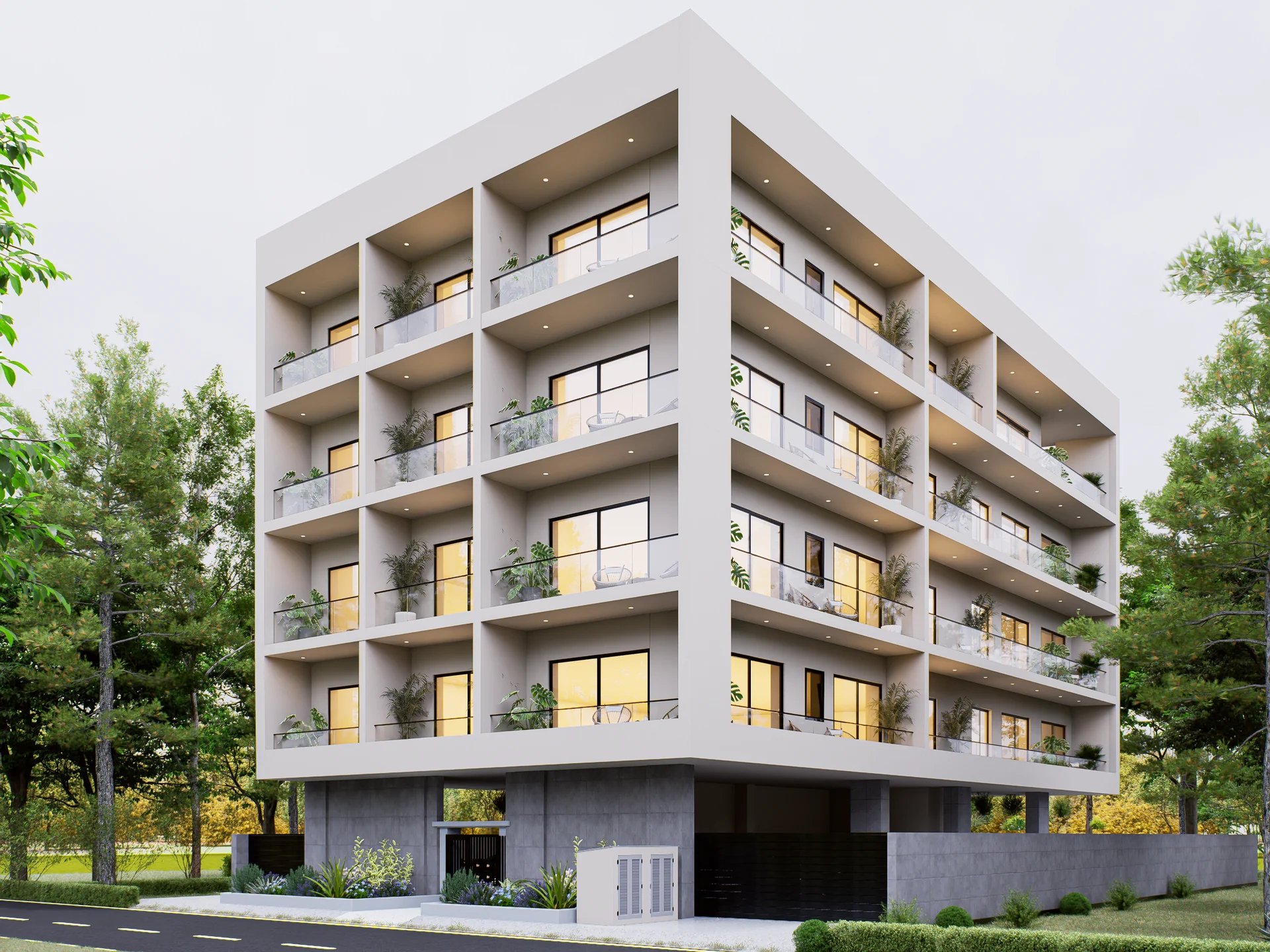
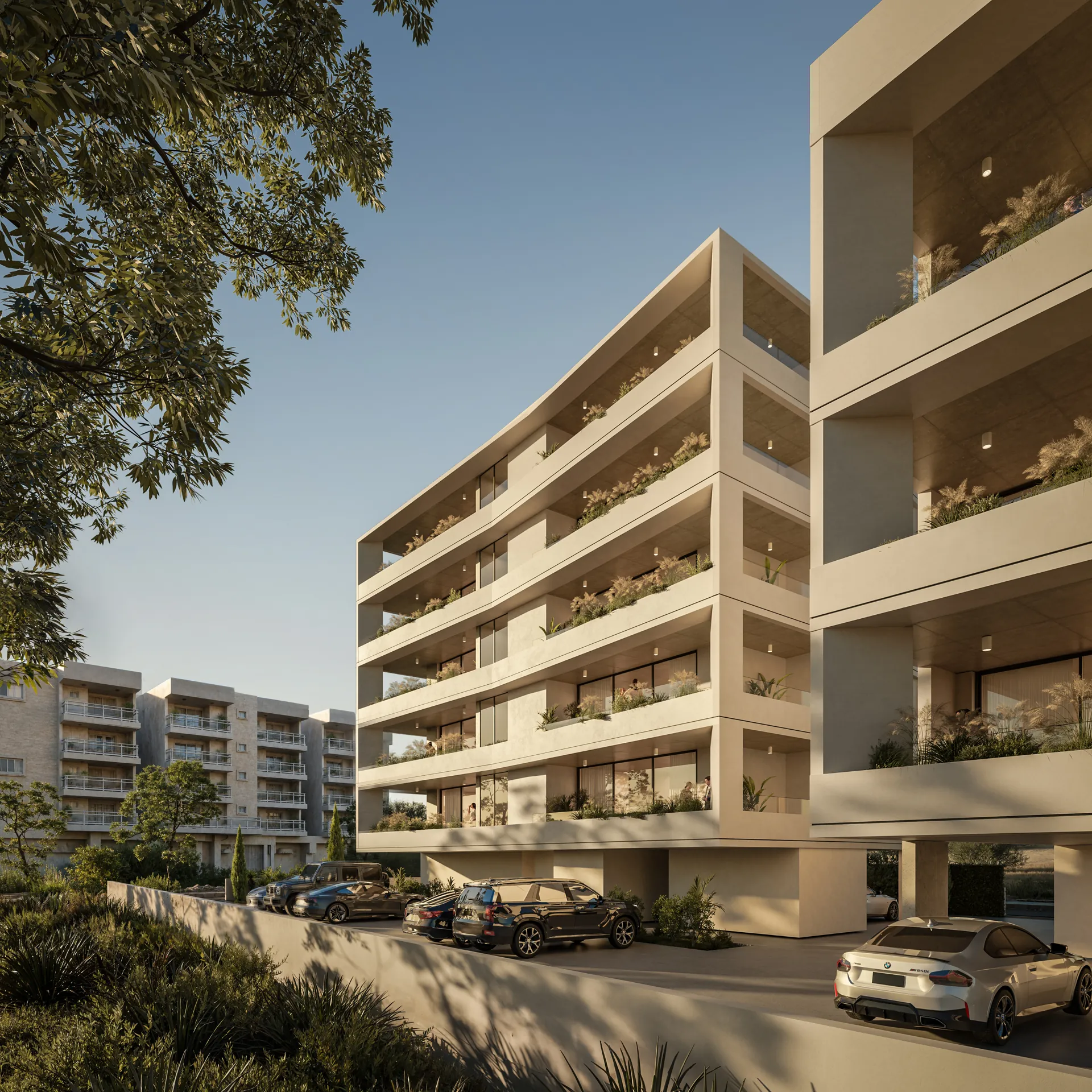
Because Palmera’s Cyprus inventory is developer-priced new-build, it is precisely the first-sale stock that qualifies — see PR-eligible projects below.
2. €50,000/year of secured foreign income
You must prove a secured annual income of at least €50,000, and for the property route that income must come from outside Cyprus — salary, pension, dividends, rental income or business profits earned abroad all count. The threshold rises with family size:
- +€15,000 for a dependent spouse;
- +€10,000 for each dependent minor child.
So a couple with two young children needs roughly €50,000 + €15,000 + €20,000 = €85,000/year of secured foreign income. This requirement was raised from €30,000 to €50,000 in the May 2023 overhaul (Chambers.law; GK Law Firm, 2026).
3. Keep the investment, and visit once every two years
Permanent residency is conditional on maintaining the investment: if you sell the qualifying property without replacing it with an equivalent qualifying investment, the residency is revoked. Holders must submit annual evidence that the investment (and required income and health cover) is maintained, and must visit Cyprus at least once every two years. You may let the qualifying property and earn rental income — PR, unlike the 5% VAT relief, does not require you to occupy it.
Who can be included — and the 2023 changes
One application covers the main applicant, spouse, and dependent children under 18. Unmarried children aged 18–25 can be included if they are financially dependent and in full-time education. The May 2023 revision tightened family inclusion in two ways every applicant should know:
- Parents and parents-in-law were removed from the eligible dependents. Previously a single €300,000 investment could bring in the investor’s parents; now it cannot.
- Adult children need their own investment. Each adult child seeking PR in their own right must make a separate €300,000 investment and show €50,000 income.
(Chambers.law; Koufettas Law, 2026.)
Timeline: what “fast-track” actually means
| Stage | Typical duration |
|---|---|
| Reserve unit, due diligence, sign contract, pay €300k | 2–6 weeks |
| Lodge contract with Land Registry; assemble income/health/clean-record documents | 2–4 weeks |
| Submit application; examination by the Civil Registry & Migration Department | ~2 months (target); 2–6 months in practice |
| Approval; travel to Cyprus for biometrics (usually within 1 year) | — |
| Permanent residency issued | Indefinite (subject to maintain-investment + visit-every-2-years) |
The “2 months” is the examination target for a complete Category 6.2 file; incomplete submissions and peak volumes push it out. Treat 2–6 months as the realistic planning window (Ministry of Interior; GK Law Firm, 2026).
Cost stack (illustrative, €300,000 qualifying purchase)
- Property: €300,000 (ex-VAT), the qualifying investment.
- VAT: €57,000 at 19%, or as low as €15,000 if the home qualifies for the 5% primary-residence rate on the first 130 m² (note: if you intend to rent the unit out, the 5% relief does not apply — you pay 19%).
- Transfer fees: €0 — waived because VAT is charged on new builds.
- Stamp duty: €0 — abolished from 1 January 2026.
- Legal, government and application fees: typically €5,000–€10,000 all-in, including the ~1% legal fee and per-person immigration fees.
The interaction of the €300k (ex-VAT) threshold, the 5% vs 19% VAT choice, and your rental intentions is exactly where a Cyprus lawyer earns their fee — model it before you sign.
Where PR buyers actually buy
The €300,000 route maps neatly onto Palmera’s live inventory and the cities foreign buyers favour:
- Limassol — the priciest, most international city; most Square One and Crona Group projects sit in the €250,000–€650,000 band, so clearing €300,000 with a single quality unit is straightforward. Historically the Russian hub; buyer base now diversified.
- Larnaca — the value coast and the #1 destination for Israeli buyers, roughly a 20-minute-to-1-hour flight from Tel Aviv; entry from the low-€200,000s means PR buyers here typically combine two units or step up to a premium seafront home to reach €300,000.
- Paphos — the British-favoured coastal district; the Square One ZAYA Residences two-bed apartments (from €349,000) clear the threshold in one unit.
Browse PR-eligible new-build projects, see the Square One range, or talk to our Cyprus team — developer pricing, no buyer commission on primary inventory, and we flag exactly which units clear €300,000.
Cyprus PR vs Dubai’s Golden Visa
If you are weighing this against the UAE, the headline is: Cyprus gives you a permanent EU residency and a citizenship pathway from €300,000, while Dubai gives a renewable 10-year visa (no citizenship) from AED 2,000,000 (~€510,000) but with zero income and capital-gains tax and deeper rental yields. Our Cyprus vs Dubai guide runs the full comparison — many of our investors hold both.
All figures current as of July 2026 and sourced to the references above. Immigration criteria change; confirm the live requirements with a licensed Cyprus lawyer and the Civil Registry & Migration Department before applying.
Frequently asked questions
How much do I need to invest for Cyprus permanent residency?
A minimum of €300,000 (excluding VAT) in property, plus proof of a secured annual income of at least €50,000 from sources outside Cyprus. The €50,000 income requirement rises by €15,000 for a spouse and €10,000 for each dependent minor child. The full €300,000 must be paid and the contract lodged with the Land Registry before you submit the application (Ministry of Interior, Regulation 6(2); May 2023 revised criteria).
Does resale property qualify for Cyprus permanent residency?
No — and this is the rule that catches most applicants. Under the fast-track Category 6.2, the €300,000 must be invested in new residential property bought directly from a development company (a first sale). Second-hand/resale property does not qualify, regardless of price. You may combine one or two new units to reach the €300,000, but both must be first-sale from a developer.
What is the €50,000 income requirement and where must it come from?
You must show a secured annual income of at least €50,000, and for the property route it must originate from abroad (outside Cyprus) — for example salary, pensions, dividends, rents or business profits earned overseas. Add €15,000 for a dependent spouse and €10,000 per dependent minor child. The income proves you can support your family without working in Cyprus.
How long does Cyprus permanent residency take?
The fast-track (Category 6.2) is designed to be examined within about 2 months of a complete submission, though in practice some cases run to 2–6 months depending on documentation and volumes. Once approved, holders typically visit Cyprus within a year to give biometrics, and the residency is permanent — it does not expire, provided you keep the investment and visit at least once every two years.
Do I have to live in Cyprus to keep permanent residency?
No. There is no minimum-stay requirement. To keep the status you must visit Cyprus at least once every two years and continue to hold the qualifying investment. This 'buy, hold, visit occasionally' structure is why the programme suits investors and families who are not ready to relocate full-time.
Who can be included in one application?
The main applicant, their spouse, and dependent children under 18. Unmarried children aged 18–25 can be included if they are financially dependent and in full-time study. Since May 2023, parents and parents-in-law can no longer be included as dependents, and each adult child now needs their own €300,000 investment and €50,000 income to obtain PR in their own right.
Is Cyprus permanent residency the same as citizenship?
No. Category 6.2 grants permanent residency — the right to live in Cyprus indefinitely — not a passport. Cypriot citizenship is a separate naturalisation process, generally available after roughly 7–8 years of legal residence. The former 'citizenship by investment' passport scheme was terminated in 2020 and no longer exists; anyone offering a Cyprus passport for a property purchase is describing a programme that has been closed for years.
Can I rent out the property that qualifies me for residency?
Yes — the €300,000 residency-qualifying property can be let and generate rental income; unlike the 5% VAT primary-residence relief, PR does not require you to live in it. But you must keep the investment: if you sell the qualifying property (without replacing it with an equivalent qualifying investment), your permanent residency is revoked. You must submit annual evidence that the investment is maintained.
Does the €300,000 include VAT?
No. The €300,000 threshold is calculated exclusive of VAT. VAT is charged on top — 19% standard, or 5% if the home qualifies as your primary residence — so budget the tax separately. Because the two rules interact (PR uses the ex-VAT price; the 5% relief needs the home to be your main residence), plan them together with your lawyer.
Who is Cyprus permanent residency for — and who doesn't need it?
It is for non-EU (third-country) nationals — Israelis, Russians, Gulf-based buyers, and others — who want the right to live in an EU country, a base for family, and visa-friendly access to Europe. EU/EEA citizens do not need it; they already have the right to live in Cyprus. It is especially popular with Israeli families (Larnaca is a 20-minute-to-1-hour flight from Tel Aviv) and with Russian buyers concentrated in Limassol.
What are the ongoing tax benefits once I'm resident?
Cyprus has no annual property tax, no inheritance tax, and a non-domicile regime that exempts new tax residents from the Special Defence Contribution on dividends and interest for 17 years. Capital gains tax (20%) applies only on Cyprus property, with a €150,000 principal-residence exemption. Becoming a Cyprus tax resident (e.g. via the 60-day rule) is a separate step from holding PR — we cover it in our Cyprus vs Dubai guide.
Can Palmera show me PR-eligible projects?
Yes. Our Cyprus catalog is developer-priced new-build — exactly the first-sale inventory that qualifies for Category 6.2. Several Square One and Crona Group projects list at or above the €300,000 mark, and we flag which units clear the threshold. Browse the catalog or talk to our Cyprus team; on primary off-plan stock there is no buyer commission.
Sources · last updated 20 July 2026
- Ministry of Interior — Regulation 6(2) of the Aliens & Immigration Regulations (fast-track PR); May 2023 revised criteria · 2023, current 2026
- Chambers.law / Koufettas Law / Danos & Associates — Category 6.2 amendments (income €50k, parents removed, adult children separate, maintain-investment rule) · 2026
- PwC Cyprus — VAT treatment (€300k threshold is exclusive of VAT); property tax context · 2026
- GK Law Firm — Cyprus PR routes, timeline and citizenship pathway · 2026
- Palmera Cyprus catalog — PR-eligible new-build inventory and prices · 20 Jul 2026