



















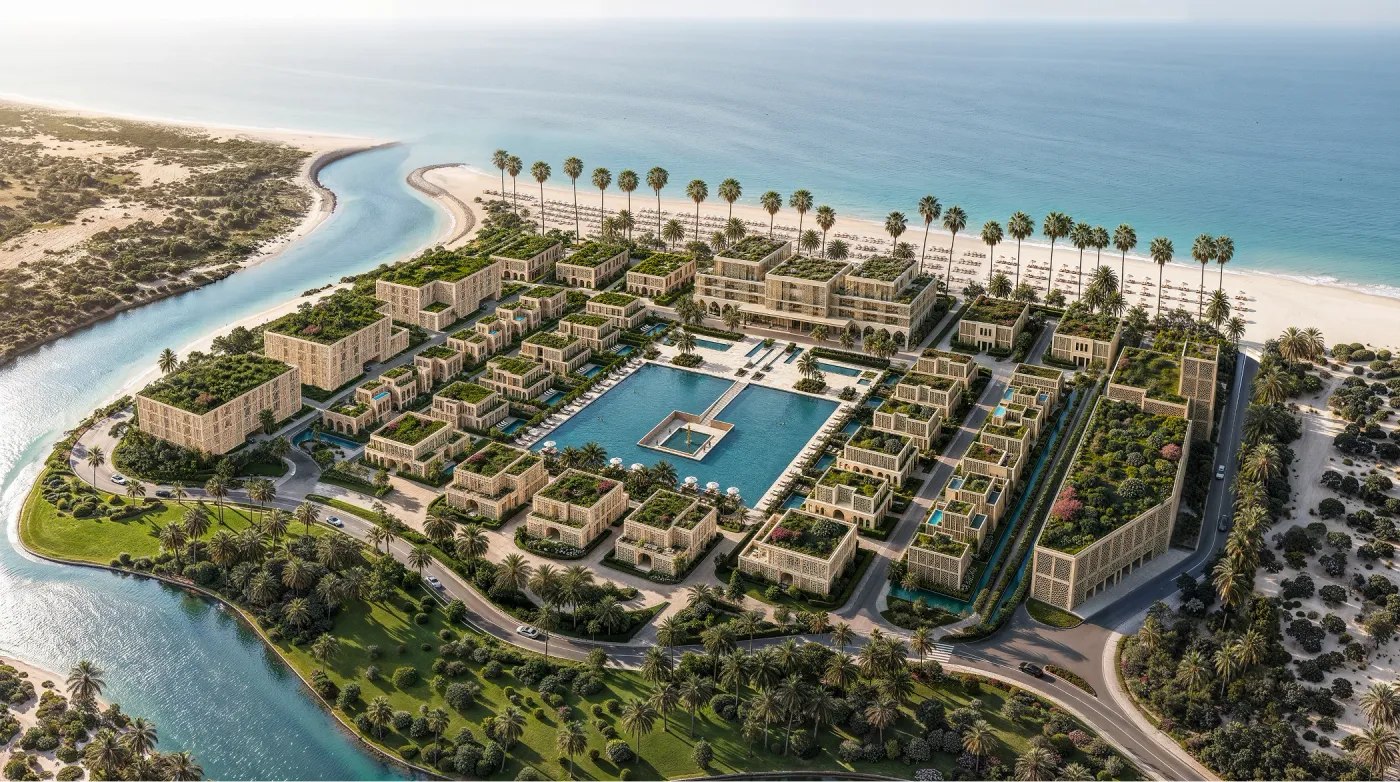



Residências de Marca e com Gestão Hoteleira em Omã: Guia do Comprador (2026)


As residências de marca tornaram-se discretamente a grande protagonista do mercado imobiliário de alto padrão de Omã. Trata-se de imóveis construídos e operados em parceria com uma marca global de hospitalidade ou lifestyle, em que uma incorporadora une a estrutura física aos padrões de serviço, linguagem de design e gestão de nomes como Marriott, Trump Organization ou Mandarin Oriental. Para o comprador internacional, o apelo é direto: você adquire uma residência com a aparência, a sensação e o serviço de um hotel cinco estrelas, respaldada pela reputação de uma marca consolidada.
Em Mascate, esse segmento está acelerando rapidamente. O sinal mais claro desse impulso veio em junho de 2026, quando uma única villa de marca em Mascate foi vendida por OMR 1,740,000, conforme reportado pela Travels Dubai, destacando o enorme apetite no topo do mercado. Ao mesmo tempo, comunidades planejadas por uma incorporadora principal, como AIDA, estão integrando marcas globais ao estilo de vida resort, e uma onda de novos projetos focados em design está chegando ao mercado em toda a capital.
Este guia foi escrito para o comprador estrangeiro que busca decidir se uma residência de marca vale o prêmio. Explicamos o que 'de marca' realmente significa e pelo que você está pagando, por que esses imóveis comandam preços mais altos, como os programas de locação geridos por hoteleiros realmente funcionam (incluindo as pegadinhas), os projetos emblemáticos em Omã que vale a pena conhecer e os direitos de propriedade plena (freehold) e residência que acompanham a compra dentro de um complexo turístico integrado (ITC) designado. Todos os números abaixo são fundamentados em fontes, e onde o cenário ainda está em evolução, afirmamos isso claramente em vez de especular.
Índice
- O que uma residência de marca realmente significa
- Por que as residências de marca comandam um prêmio
- Programas de locação geridos por hoteleiros: como funcionam e as pegadinhas
- Projetos emblemáticos de marca em Omã
- Propriedade, propriedade plena (freehold) e residência para compradores de marcas
- Com marca vs. sem marca: compensações de revenda e rentabilidade
- Due diligence da marca e do contrato de operação
- Para quem as residências de marca são mais adequadas
O que uma 'residência de marca' realmente significa (e pelo que você paga)
Uma residência de marca é um imóvel de propriedade privada que ostenta o nome, os padrões de design e, frequentemente, o serviço operacional de uma marca reconhecida, geralmente um grupo hoteleiro, mas às vezes uma marca de moda, automotiva ou de uma incorporadora. Na prática, a marca atua em várias frentes: molda a arquitetura e os interiores de acordo com um padrão definido, empresta seu nome e garantia de qualidade, e frequentemente fornece serviços contínuos, como concierge, governanta, manutenção e acesso a comodidades no local operadas com padrão de hotelaria.
O que você está comprando, portanto, não são apenas metros quadrados. Você está adquirindo um padrão curado e uma camada de serviços que um edifício de apartamentos típico não oferece. Em Omã, esse conceito se consolidou no segmento de luxo do mercado: projetos como o Marriott Residences at AIDA, desenvolvido pela DarGlobal, entregam exatamente essa combinação de uma marca global de hospitalidade atrelada a residências de propriedade privada. De acordo com a TopHotel News, o projeto compreende 244 residências distribuídas em duas torres, em configurações de um a três quartos, com a conclusão da obra prevista para o quarto trimestre de 2027.
O ponto-chave para os compradores é que o prêmio que você paga cobre o padrão da marca, o design e a infraestrutura de serviços, e não apenas a localização. Se esse prêmio faz sentido depende do quanto você valoriza esses elementos, uma questão à qual retornaremos abaixo.
Por que as residências de marca comandam um prêmio de preço
As residências de marca geralmente são vendidas por um preço mais alto por metro quadrado em comparação a imóveis similares sem marca nas proximidades, e os motivos são tangíveis, não apenas cosméticos. A marca traz a garantia de design e qualidade de construção, uma operação de serviços que os proprietários não precisam montar por conta própria e um nome que tem peso para futuros compradores e inquilinos. Para os compradores que entram em um mercado de luxo relativamente jovem como o de Omã, essa segurança tem um valor real.
A força da demanda no topo do mercado de Mascate ilustra bem esse ponto. A venda da villa de marca por OMR 1,740,000 registrada em junho de 2026, reportada pela Travels Dubai, mostra que os compradores estão dispostos a pagar preços premium pelo produto de marca certo. Essa única transação é um indicador útil de como o segmento está amadurecendo, mesmo que o argumento mais amplo para pagar um prêmio dependa, em última análise, da marca, do design e dos serviços que você recebe.
A tabela abaixo detalha os principais elementos pelos quais o prêmio de uma residência de marca tipicamente paga, para que você possa ponderá-los em relação ao preço pedido de qualquer projeto específico.
| Pelo que o prêmio paga | O que entrega ao proprietário |
|---|---|
| Nome e padrões da marca | Design garantido, qualidade de construção e um selo reconhecido |
| Infraestrutura de serviços | Concierge, governanta e manutenção com padrão de hotelaria |
| Comodidades geridas | Acesso a instalações de estilo hoteleiro dentro da comunidade |
| Reconhecimento na revenda | Um nome que futuros compradores e inquilinos reconhecem |
Programas de locação geridos por hoteleiros: como funcionam e as pegadinhas
Uma das características mais atraentes comercializadas com as residências de marca é o programa de locação gerido por hoteleiros. A ideia é simples: quando você não estiver usando o imóvel, o operador no local pode incluí-lo em um pool de locação, cuidando das reservas, serviços aos hóspedes e manutenção, e repassando a você uma parte da receita. Para um proprietário ausente, essa é uma maneira genuinamente conveniente de gerar renda com o imóvel sem precisar gerenciá-lo pessoalmente.
A pegadinha é que a estrutura e a economia desses programas variam muito de um empreendimento para outro, e você nunca deve presumir um retorno garantido. Os acordos de pool de locação, as divisões de receita, a dedução de custos pelo operador e as regras sobre a frequência com que você mesmo pode usar o imóvel diferem de projeto para projeto. Alguns operadores executam um modelo de pool real, onde a receita é compartilhada entre todas as unidades participantes, enquanto outros gerenciam cada imóvel individualmente. Os termos estão estabelecidos no contrato de operação, não no material de divulgação, e é neles que reside o retorno real.
Há também uma camada regulatória específica de Omã. A locação de curto prazo, no estilo Airbnb, não é automaticamente permitida em todas as comunidades e, mesmo dentro de um ITC, os regulamentos internos de cada comunidade podem restringir ou exigir aprovação para a atividade de locação de curta temporada. Isso significa que um programa gerido por hoteleiros é o caminho mais seguro para a renda de curta temporada, precisamente porque o operador atua dentro das regras da comunidade, mas você ainda deve confirmar o que é e o que não é permitido antes de confiar em qualquer projeção de locação. A posição honesta é esta: os programas geridos por hoteleiros podem tornar a propriedade fácil e geradora de renda, mas os retornos não são garantidos e dependem inteiramente do programa documentado para aquele projeto específico.
Projetos emblemáticos de marca em Omã (AIDA, Muscat Bay, Shatti Al Qurum)
O cenário de residências de marca de Omã está concentrado em Mascate e arredores, com um forte agrupamento dentro dos ITCs emblemáticos do país. O exemplo mais proeminente é AIDA, um empreendimento no topo de um penhasco planejado por uma incorporadora principal que une a DarGlobal e a OMRAN a marcas globais, incluindo a Trump Organization e a Marriott, conforme detalhado na página do projeto AIDA da DarGlobal. Dentro de AIDA, o desenvolvimento Marriott Residences traz 244 residências de marca distribuídas em duas torres, com a conclusão da obra prevista para o quarto trimestre de 2027, de acordo com a TopHotel News.
Além de AIDA, o segmento está se ampliando por toda a capital. Conforme reportado pela Travels Dubai, outros projetos de marca e focados em design em Mascate incluem The Sustainable City Yiti, Olive Farms da Muriya, Vistal da LEO Development, Luma Residence em Muscat Bay e um empreendimento vinculado ao Mandarin Oriental em Shatti Al Qurum. A tabela abaixo resume esses projetos emblemáticos e suas associações de marca ou incorporadora.
| Projeto | Localização | Associação de marca / incorporadora |
|---|---|---|
| Marriott Residences at AIDA | AIDA, Mascate | Marriott, pela DarGlobal (com a OMRAN) |
| AIDA (residências vinculadas à Trump) | AIDA, Mascate | Trump Organization, pela DarGlobal |
| Luma Residence | Muscat Bay | Comunidade Muscat Bay |
| Empreendimento vinculado ao Mandarin Oriental | Shatti Al Qurum, Mascate | Vinculado ao Mandarin Oriental |
| The Sustainable City Yiti | Yiti, Mascate | Empreendimento sustentável focado em design |
| Olive Farms | Mascate | Pela Muriya |
| Vistal | Mascate | Pela LEO Development |
A Palmera comercializa uma seleção focada das comunidades ITC de Omã, incluindo AIDA e Muscat Bay, onde se encontram várias dessas oportunidades de marca. Você pode conferir a linha atual em nossa página de imóveis em Omã. Como as afiliações de marca, o número de unidades e as datas de entrega (das chaves) podem mudar à medida que os projetos avançam, confirme sempre os detalhes mais recentes de qualquer residência específica antes de se comprometer.
Propriedade, propriedade plena (freehold) e residência para compradores de marcas
Uma preocupação comum entre os compradores estrangeiros é saber se uma residência de marca oferece a mesma segurança de propriedade que qualquer outro imóvel. Dentro de um ITC, oferece. Conforme confirmado pela Branded Resi, as residências de marca localizadas em ITCs possuem propriedade plena (freehold) estrangeira total e a mesma elegibilidade de residência que outros imóveis em ITC. Em outras palavras, a camada da marca não dilui o seu título de propriedade; você é o dono absoluto do imóvel, com o direito de vender, alugar e transmiti-lo, exatamente como faria com uma residência de ITC sem marca.
Isso importa por dois motivos. Primeiro, a propriedade plena (freehold) dentro de um ITC é uma propriedade genuína e permanente, e não um arrendamento de longo prazo (leasehold), portanto, uma compra de marca é um ativo real que você controla. Segundo, como a compra em um ITC pode subsidiar a residência para investidores de Omã, uma residência de marca qualificada pode ter dupla função: tanto como residência de estilo de vida quanto como caminho para a residência. O Golden Visa (Residência para Investidores) de Omã, relançado em 31 de agosto de 2025, concede uma residência renovável de 10 anos para imóveis em ITC no valor de pelo menos OMR 200,000 (cerca de USD 520,000), portanto, uma residência de marca nesse patamar ou acima pode se qualificar nos mesmos termos que qualquer outra residência em ITC.
Também vale a pena manter em mente o panorama tributário mais amplo de Omã. Atualmente, não há imposto de renda pessoal em Omã, o que faz parte do apelo do país, mas isso está prestes a mudar: um imposto de renda pessoal de 5% sobre a parcela da renda anual acima de OMR 42,000 entra em vigor a partir de 1º de janeiro de 2028. Para a maioria dos compradores individuais, esse limite é alto, mas é um fator a ser considerado no planejamento, em vez de ignorado, e 'isento de impostos para sempre' não é uma afirmação precisa.
Com marca vs. sem marca: compensações de revenda e rentabilidade
Escolher entre uma residência de marca e um imóvel equivalente sem marca resume-se a uma compensação. No lado positivo, a marca pode favorecer o reconhecimento na revenda e o apelo para inquilinos, e a camada de serviços geridos por hoteleiros pode tornar o imóvel mais fácil de alugar e administrar. No outro lado da balança, você paga um preço de entrada mais alto pelo padrão de marca e design, e qualquer receita de locação gerida é compartilhada com o operador, em vez de ser mantida integralmente.
Especificamente sobre a rentabilidade de aluguel, a resposta honesta é que depende inteiramente do programa de locação documentado do projeto e do mercado vigente, e não de um número de destaque. As residências de marca são frequentemente comercializadas com narrativas de renda atraentes, mas os termos do pool de locação e as divisões de receita variam, e a renda de locação de curta temporada está sujeita às regras da comunidade. A abordagem disciplinada é modelar o seu retorno do investimento (ROI) com base no contrato de operação real e em uma premissa conservadora de ocupação, e então comparar isso com uma locação de longo prazo direta de uma unidade comparável sem marca. Para um comprador que valoriza a conveniência e um modelo sem preocupações, o caminho da marca ainda pode sair na frente, mesmo após a participação do operador; para um comprador focado puramente em maximizar a rentabilidade líquida, um imóvel sem marca com um arrendamento de longo prazo padrão pode competir bem.
Em resumo, a escolha certa não é universal. Depende de se você está comprando principalmente por estilo de vida e conveniência, por renda ou por uma combinação de ambos.
Due diligence da marca e do contrato de operação
Como grande parte do valor de uma residência de marca reside no relacionamento com a marca e no acordo de gestão, a due diligence aqui é diferente de uma compra padrão. Três verificações são as mais importantes.
Primeiro, verifique a afiliação da marca diretamente. As parcerias de marca e os detalhes do projeto podem mudar à medida que os empreendimentos evoluem, portanto, confirme a marca atual, o número de unidades e a entrega (das chaves) prevista com os materiais atualizados da própria incorporadora, em vez de confiar em materiais de divulgação mais antigos. Um projeto anunciado com uma configuração pode ter evoluído até o momento da sua compra.
Segundo, leia o contrato de operação, não o material de divulgação. Este é o documento que rege o funcionamento de qualquer programa de locação, qual parcela da receita você recebe, quais custos são deduzidos, com que frequência você mesmo pode usar o imóvel e por quanto tempo o acordo de gestão vigora. Nunca aceite um retorno declarado sem ver o programa subjacente por escrito, e trate qualquer valor 'garantido' com ceticismo saudável até que esteja documentado e contratualizado.
Terceiro, confirme a posição sobre locação de curta temporada. Mesmo dentro de um ITC, os regulamentos da comunidade podem restringir a locação de curto prazo, portanto, verifique se o modelo de renda no qual você está contando é realmente permitido e se o operador atua dentro dessas regras. Obter respostas claras sobre esses três pontos antes de se comprometer é a diferença entre uma residência de marca que entrega o que foi anunciado e uma que decepciona.
Para quem as residências de marca são mais adequadas
As residências de marca não são para todos, e isso é intencional. Elas atendem compradores que valorizam muito a qualidade garantida, o serviço de padrão hoteleiro e um nome reconhecível, e que estão dispostos a pagar um prêmio por isso. Funcionam especialmente bem para proprietários internacionais que passam apenas parte do ano em Omã e desejam um imóvel pronto para morar, gerido profissionalmente, que possa gerar renda por meio de um programa gerido por hoteleiros enquanto estão fora, sem o trabalho de administrá-lo pessoalmente.
Elas também atraem compradores que desejam que sua compra tenha mais de uma função: uma residência de marca emblemática dentro de um ITC como AIDA ou Muscat Bay pode servir como uma residência de estilo de vida, uma reserva de valor de longo prazo e, se atingir o limite de OMR 200,000, um caminho para a residência para investidores de 10 anos de Omã. Para um comprador focado exclusivamente em extrair a maior rentabilidade líquida possível pelo menor preço de entrada, um apartamento em ITC sem marca pode ser a ferramenta mais afiada, mas para aqueles que buscam qualidade, conveniência e um nome em que confiam, as residências de marca são cada vez mais a opção de destaque em Mascate.
Se você precisar de ajuda para decidir se uma residência de marca se encaixa nos seus objetivos e qual dos projetos emblemáticos de Omã corresponde ao seu orçamento e planos, a Palmera Elite Real Estate Brokerage LLC é especializada no mercado de ITC do país. Você pode explorar as oportunidades atuais por meio das nossas páginas de imóveis em Omã e incorporadoras, ou começar pelo nosso hub de Omã para uma visão geral. Para discutir as opções de marca que melhor se adequam a você, com informações verificadas e sem promessas inventadas, entre em contato pelo e-mail team@palmera.realestate e nossa equipe terá prazer em ajudar.
O que é uma residência de marca e vale a pena o prêmio?
Uma residência de marca é um imóvel de propriedade privada construído e operado em parceria com uma marca reconhecida, geralmente um grupo hoteleiro, que empresta seu nome, padrões de design e frequentemente serviços de padrão hoteleiro, como concierge e governanta. Em Omã, os exemplos incluem o Marriott Residences at AIDA, um empreendimento de 244 residências da DarGlobal com conclusão prevista para o quarto trimestre de 2027. Se o prêmio vale a pena depende do quanto você valoriza a qualidade garantida, uma camada de serviços e um nome reconhecido, já que é por isso que o preço mais alto é pago, e não apenas pela localização.
Quais marcas hoteleiras têm residências em Omã?
O exemplo emblemático é AIDA, que une a DarGlobal e a OMRAN a marcas globais, incluindo a Trump Organization e a Marriott; somente o Marriott Residences at AIDA compreende 244 residências distribuídas em duas torres. Outros projetos de marca e focados em design em Mascate incluem The Sustainable City Yiti, Olive Farms da Muriya, Vistal da LEO Development, Luma Residence em Muscat Bay e um empreendimento vinculado ao Mandarin Oriental em Shatti Al Qurum. Como as afiliações de marca podem mudar à medida que os projetos avançam, confirme a marca atual com a incorporadora antes de comprar.
As residências de marca vêm com renda de aluguel garantida?
Não automaticamente. Os programas de locação geridos por hoteleiros podem incluir seu imóvel em um pool enquanto você estiver fora e repassar uma parte da receita, mas a estrutura, a divisão da receita e os termos variam muito de projeto para projeto e estão estabelecidos no contrato de operação, não no material de divulgação. Você nunca deve presumir um retorno garantido; leia sempre o programa documentado primeiro. Observe também que a locação de curto prazo não é automaticamente permitida em todas as comunidades, mesmo dentro de um ITC, portanto, confirme as regras antes de confiar em qualquer projeção de locação de curta temporada.
Estrangeiros podem possuir residências de marca em propriedade plena (freehold)?
Sim, desde que a residência esteja localizada dentro de um complexo turístico integrado (ITC) designado. As residências de marca em ITCs possuem propriedade plena (freehold) estrangeira total e a mesma elegibilidade de residência que qualquer outro imóvel em ITC, portanto, a camada da marca não reduz seus direitos de propriedade. Uma compra qualificada em ITC no valor de pelo menos OMR 200,000 (cerca de USD 520,000) também pode subsidiar a residência para investidores renovável de 10 anos de Omã, relançada em 31 de agosto de 2025.
As residências de marca são mais fáceis de revender?
Uma marca reconhecida pode favorecer o reconhecimento na revenda e o apelo para inquilinos, o que é parte do que o prêmio paga, e a forte demanda no topo do mercado de Mascate, ilustrada pela venda de uma villa de marca por OMR 1,740,000 em junho de 2026, mostra um apetite real pelo produto de marca certo. Dito isso, os resultados de revenda dependem do projeto específico, da marca e das condições de mercado, e não de qualquer garantia. A compensação é que você paga mais adiantado pela marca, portanto, pondere as vantagens de revenda e serviço em relação ao preço de entrada mais alto para os seus objetivos específicos.