





















Perspectivas do Mercado Imobiliário de Omã para 2026: Visão 2040, Turismo e Oferta


A maioria dos investidores descobre Omã da mesma forma que descobre uma costa tranquila antes da chegada das multidões — tarde, e com uma leve sensação de que deveriam ter procurado antes. Enquanto as manchetes perseguem os volumes recordes de transações de Dubai, Omã tem construído algo diferente: um programa de diversificação, uma estratégia de turismo e um pipeline de comunidades costeiras com plano diretor que só agora estão chegando ao mercado em grande escala. Para um comprador estrangeiro que se pergunta “por que Omã, e por que agora?”, a resposta está no cenário macroeconômico, e não em um único projeto.
Esse cenário macroeconômico está melhorando em várias frentes ao mesmo tempo. O mercado residencial cresce de forma constante, os números do turismo estão subindo, o governo está canalizando somas enormes para a infraestrutura, e a Visão 2040 — o plano econômico de longo prazo de Omã — está afastando explicitamente a economia do petróleo e direcionando-a para os setores que sustentam a demanda imobiliária. Nada disso garante retornos, mas cria um cenário que recompensa o capital paciente e bem localizado.
Esta perspectiva apresenta os números por trás da história: o tamanho do mercado e a velocidade prevista de seu crescimento, de onde virá a nova oferta, como Mascate e Salalah se comparam, como é o cenário de preços para 2026 e os riscos que valem a pena ser pesados antes de você se comprometer. Cada dado é atribuído e datado — porque uma perspectiva de mercado só é útil se você puder ver de onde vem cada afirmação.
Índice
- Visão 2040 em um minuto: por que a diversificação importa para o mercado imobiliário
- O motor do turismo: meta de 11.7m de visitantes até 2040
- Tamanho e crescimento do mercado: os números para 2026-2031
- De onde vem a oferta (mega planos diretores)
- Perspectiva regional: Mascate vs Dhofar/Salalah
- Previsão de preços e demanda para 2026
- Riscos e ventos contrários que os investidores devem observar
- Por que imóveis na planta em ITCs são a oportunidade central
Visão 2040 em um minuto: por que a diversificação importa para o mercado imobiliário
A Visão 2040 de Omã é a estratégia nacional para afastar a economia de sua dependência histórica do petróleo e do gás. Sua ambição principal é impressionante: fazer com que 90% da economia venha de setores não petrolíferos, juntamente com a meta de 11.7 milhões de turistas anualmente até 2040 (sandsofwealth.com). Para um investidor imobiliário, isso não é uma política abstrata — é o motor da demanda. Turismo, logística, manufatura e serviços exigem pessoas, e as pessoas exigem casas, hotéis, apartamentos com serviços e as comunidades que os cercam.
A diversificação importa para o mercado imobiliário porque muda quem são o comprador final e o inquilino final. Uma economia construída sobre o petróleo concentra riqueza e emprego de forma restrita; uma economia construída sobre turismo e serviços espalha a demanda entre trabalhadores da hospitalidade, profissionais expatriados, compradores de casas de férias e visitantes de curta estadia. Essa ampliação é exatamente o que sustenta os Complexos Turísticos Integrados (ITCs), onde estrangeiros podem ter propriedade plena (freehold) — zonas designadas construídas explicitamente para atrair demanda internacional por estilo de vida e investimento. A Visão 2040 é, na prática, a justificativa política para o próprio modelo de ITC.
O capital por trás da estratégia é substancial. Relata-se que Omã tenha cerca de USD 235 bilhões em investimentos em infraestrutura distribuídos entre transporte, logística e desenvolvimento urbano — gastos que apoiam os valores dos imóveis ao melhorar a conectividade, os serviços e o caso de investimento geral (sandsofwealth.com). Esse número vem de uma fonte de corretora, e não de um livro-razão governamental auditado, portanto, trate-o como uma escala indicativa de intenção, e não como um orçamento detalhado; mesmo com essa ressalva, a direção é claramente em direção a um investimento pesado e sustentado.
O motor do turismo: meta de 11.7m de visitantes até 2040
Se a Visão 2040 é a estratégia, o turismo é a parte que impulsiona mais diretamente a demanda imobiliária — particularmente nos ITCs costeiros que dominam o mapa de propriedade estrangeira de Omã. A meta de longo prazo de 11.7 milhões de turistas anualmente até 2040 (sandsofwealth.com) é ambiciosa, mas a tendência de curto prazo já aponta na direção certa: o número de hóspedes de hotéis subiu 3.6% em 2024, com mais de 3.5 milhões de visitantes registrados até novembro (sandsofwealth.com).
Por que isso importa para um comprador? A demanda turística alimenta duas fontes de receita distintas. A primeira é a demanda por aluguel de curta estadia em comunidades de resorts — os distritos de marinas de Mascate, a costa de Dhofar ao redor de Salalah e os ITCs de resorts ao sul da capital. A segunda, mais lenta, porém mais duradoura, é a valorização do capital: à medida que um destino amadurece e o número de visitantes sobe, o solo subjacente e as comunidades de marca construídas sobre ele tendem a ser reavaliados. Ambas as fontes dependem de a economia de visitantes realmente entregar resultados, e é por isso que a trajetória do turismo é a única variável macroeconômica mais importante para um investidor de ITC acompanhar.
Uma palavra de disciplina aqui: o aumento do turismo apoia a demanda por aluguéis de curta temporada, mas não concede automaticamente o direito de operá-los. Muitos regulamentos de comunidades de ITC restringem ou proíbem aluguéis no estilo Airbnb sem aprovação explícita, portanto, qualquer tese de renda construída sobre o turismo de curta estadia deve ser verificada em relação às regras da comunidade específica antes de você comprar. O vento macroeconômico a favor é real; o direito de capturá-lo é específico de cada imóvel.
Tamanho e crescimento do mercado: os números para 2026-2031
O tamanho da oportunidade é melhor enquadrado pela própria trajetória do mercado residencial. O mercado imobiliário residencial de Omã é estimado em cerca de USD 5.29 bilhões em 2026, acima dos cerca de USD 4.96 bilhões em 2025, e deve atingir aproximadamente USD 7.34 bilhões até 2031, com uma CAGR de cerca de 6.74% entre 2026 e 2031 (Mordor Intelligence). Esse é um crescimento composto constante, de um dígito intermediário — não o padrão explosivo de boom e correção de alguns mercados do Golfo, mas uma expansão mais medida que se adequa a investidores de longo prazo.
| Métrica | Valor | Fonte |
|---|---|---|
| Tamanho do mercado residencial, 2025 | ~USD 4.96 bilhões | Mordor Intelligence |
| Tamanho do mercado residencial, 2026 | ~USD 5.29 bilhões | Mordor Intelligence |
| Tamanho projetado do mercado, 2031 | ~USD 7.34 bilhões | Mordor Intelligence |
| CAGR prevista, 2026-2031 | ~6.74% | Mordor Intelligence |
| Região de crescimento mais rápido (Dhofar) | ~7.82% CAGR até 2031 | Mordor Intelligence |
Esses dados de tamanho de mercado e CAGR vêm de uma única casa de análise (Mordor Intelligence), portanto, é melhor lê-los como uma estimativa credível, e não como um consenso de mercado; sempre que possível, cruze essas informações com outros provedores de pesquisa antes de confiá-los para uma grande alocação. O que eles transmitem de forma útil é a forma e a direção: um mercado na casa dos bilhões de dólares de um dígito intermediário, crescendo em porcentagens de um dígito intermediário, com uma região — a governadoria sulista de Dhofar — prevista para superar a média nacional.
De onde vem a oferta (mega planos diretores)
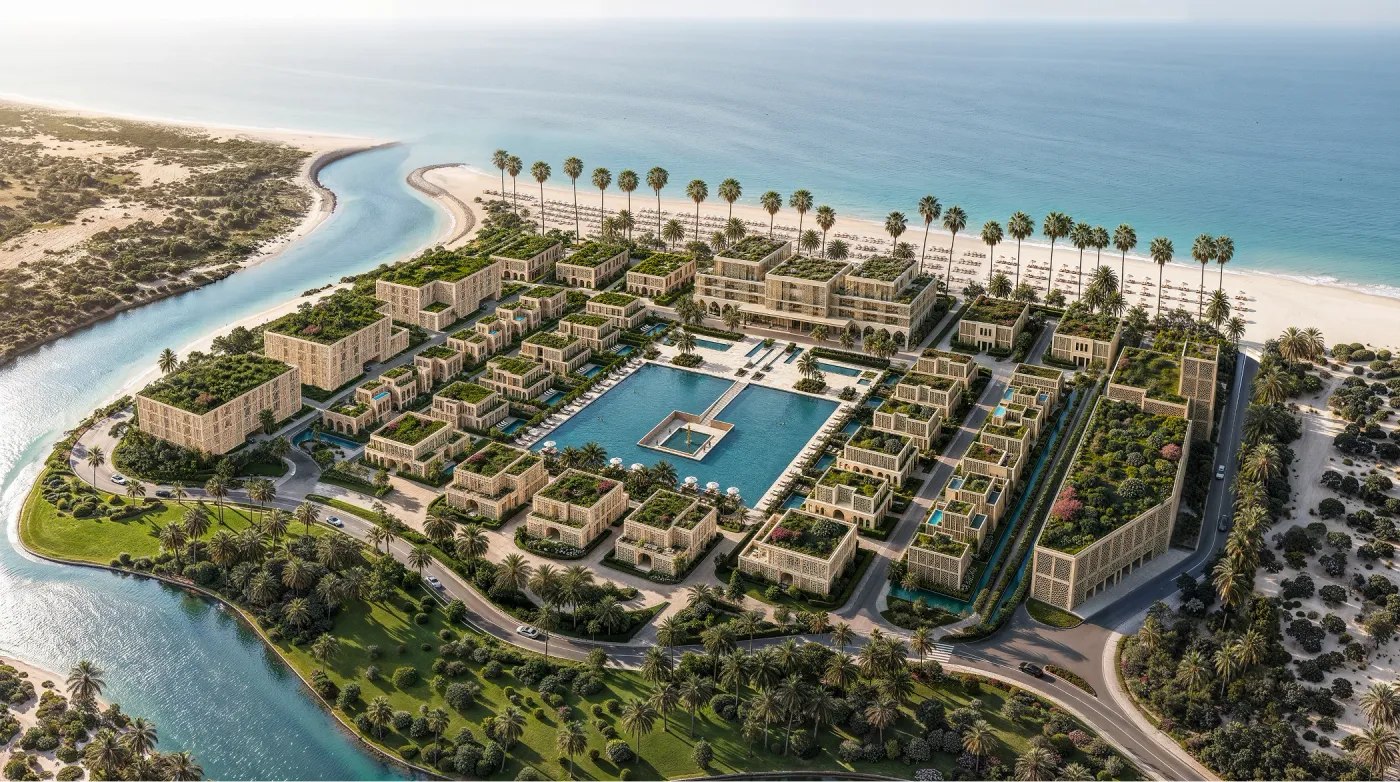
Uma previsão de crescimento só é credível se houver produto para vender, e o pipeline de Omã é cada vez mais definido por grandes planos diretores, em vez de projetos individuais dispersos. Dois se destacam: Sultan Haitham City perto de Mascate e New City Salalah em Dhofar estão acelerando a absorção de terras e a oferta (sandsofwealth.com). Estas não são torres isoladas, mas distritos urbanos planejados, projetados para adicionar moradias, serviços e infraestrutura comunitária em grande escala ao longo de múltiplas fases.
Para os investidores, a oferta liderada por planos diretores tem duas implicações. Por um lado, melhora a qualidade e a previsibilidade: entregas faseadas, comodidades integradas e uma única incorporadora principal tendem a produzir comunidades mais coerentes do que o desenvolvimento fragmentado. Por outro lado, uma grande nova oferta pode moderar o crescimento dos preços em qualquer localidade se chegar mais rápido do que a demanda — e é exatamente por isso que a localização e o momento dentro de um plano diretor importam. As áreas verificadas de Omã da Palmera abrangem exatamente esse espectro, desde os distritos consolidados e emergentes da capital até a costa de resorts.
| Área / ITC | Região | Perfil |
|---|---|---|
| AIDA, Mascate | Mascate | ITC de residências de marca no topo de falésias (DarGlobal com OMRAN) |
| Sultan Haitham City | Mascate | Grande distrito urbano com plano diretor |
| Muscat Bay | Mascate | Comunidade de luxo boutique perto da capital |
| Shatti Al Qurum | Mascate | Distrito costeiro prime consolidado |
| Yiti | Mascate | Desenvolvimento costeiro com foco em sustentabilidade |
| Jebel Sifah | Sul de Mascate | ITC de resort com marina (Muriya) |
| Hawana Salalah | Dhofar | Grande ITC costeiro impulsionado pelo turismo (Muriya) |
A presença desses planos diretores também é o motivo pelo qual a história da oferta deve ser lida junto com a história da demanda, e não isoladamente. New City Salalah é uma razão chave para Dhofar ser prevista como a região de crescimento mais rápido de Omã, e Sultan Haitham City está remodelando o corredor de crescimento da capital — ambas adicionando estoque do qual os compradores de ITCs e imóveis na planta escolherão nos próximos anos.
Perspectiva regional: Mascate vs Dhofar/Salalah
Omã não é um mercado único, e a perspectiva para 2026 diverge de forma significativa por região. Mascate é o núcleo consolidado — a capital, o maior pool de profissionais expatriados e inquilinos corporativos, e lar dos ITCs mais reconhecidos, incluindo AIDA, Muscat Bay, Shatti Al Qurum e as comunidades de resorts com marina ao seu sul. Oferece a base de demanda mais ampla e, geralmente, o mercado de revenda mais líquido dentro dos termos de Omã.
Dhofar, centrado em Salalah no sul, é a história de crescimento. É previsto como a região de crescimento mais rápido de Omã, com uma CAGR de aproximadamente 7.82% até 2031, impulsionada por New City Salalah (Mordor Intelligence). O atrativo distinto de Salalah é o Khareef — a temporada de monções que deixa a região verde e atrai uma forte onda de turismo sazonal — que sustenta a demanda por curta estadia em ITCs costeiros como Hawana Salalah. A contrapartida é a sazonalidade e um mercado menor e menos maduro do que Mascate.
| Fator | Mascate | Dhofar / Salalah |
|---|---|---|
| Papel | Núcleo consolidado da região da capital | Região de crescimento mais rápido (previsão) |
| Crescimento previsto | Trajetória da média nacional | ~7.82% CAGR até 2031 (Mordor Intelligence) |
| Motor da demanda | Inquilinos corporativos/expatriados, compradores por estilo de vida | Turismo, sazonalidade do Khareef |
| ITCs principais | AIDA, Muscat Bay, Jebel Sifah, Shatti Al Qurum, Yiti | Hawana Salalah |
| Maturidade do mercado | Mais profundo, mais líquido | Emergente, maior crescimento, mais sazonal |
A leitura prática: Mascate se adequa a investidores que priorizam a profundidade de inquilinos e a liquidez de revenda, enquanto Dhofar se adequa àqueles dispostos a trocar um pouco de maturidade por um crescimento previsto maior e uma tese liderada pelo turismo. Nenhum dos dois é universalmente “melhor” — eles atendem a objetivos diferentes.
Previsão de preços e demanda para 2026
Em relação aos preços, o enquadramento honesto é uma previsão, não um fato. Os preços dos ITCs prime de Mascate devem subir cerca de 3-5% no cenário base, com uma alta plausível de cerca de 5-10% nos ITCs de estilo de vida onde os compradores estrangeiros se concentram (sandsofwealth.com). Estas são projeções de corretoras, portanto, devem entrar no seu modelo como faixas e cenários — uma expectativa central razoável com uma inclinação de alta nas comunidades mais procuradas — e não como valorização garantida.
O lado da demanda apoia a direção dessa previsão. O turismo está em alta (hóspedes de hotéis com aumento de 3.6% em 2024, segundo sandsofwealth.com), o mercado como um todo deve crescer de forma composta a cerca de 6.74% ao ano até 2031 (Mordor Intelligence), e a demanda de compradores estrangeiros está concentrada em um conjunto relativamente pequeno de ITCs de estilo de vida — uma concentração que pode amplificar as movimentações de preços nas comunidades mais fortes. O cenário cambial remove uma preocupação comum para os compradores internacionais: o rial omanense está atrelado ao dólar americano em OMR 1 = USD 2.6008 (USD 1 = ~OMR 0.3845), uma paridade que se mantém inalterada desde 1986 (Banco Central de Omã). Para um investidor baseado em USD, isso significa que a valorização não é corroída pela oscilação cambial.
Mais uma disciplina para o lado da demanda: as rentabilidades. Os retornos sobre imóveis bem localizados em Omã são melhor apresentados como faixas atribuídas, em vez de um único número de manchete, e continuam sujeitos aos regulamentos do ITC relevante — incluindo o fato de que o aluguel de curta temporada não é automaticamente permitido. Portanto, ao modelar a demanda para 2026, separe a tese de valorização (apoiada pelas previsões acima) da tese de aluguel (que depende das regras de locação da comunidade específica).
Riscos e ventos contrários que os investidores devem observar
Uma perspectiva equilibrada nomeia os riscos. O primeiro é o risco de previsão: os números de crescimento de preços acima são projeções de uma fonte de corretora, e os dados de tamanho de mercado vêm de um único analista — ambos devem ser tratados como estimativas, cruzados sempre que possível e revisitados à medida que novos dados chegarem. Os resultados reais podem ficar abaixo ou acima de uma previsão.
O segundo é a transição regulatória. A estrutura imobiliária de Omã foi reformulada pelo Decreto Real 79/2025, mas seus regulamentos executivos ainda estão pendentes — o Ministro tem até um ano a partir da entrada em vigor para emiti-los. Até que sejam publicados, a base estabelecida e segura para a propriedade estrangeira continua sendo a propriedade plena (freehold) dentro de ITCs designados; qualquer afirmação de que estrangeiros agora podem comprar livremente fora dos ITCs é provisória. Construa seu plano na base dos ITCs, e não em uma reforma que ainda não foi implementada.
O terceiro é o momento fiscal. Omã não tem imposto de renda pessoal hoje, o que é uma atração genuína — mas isso está mudando: um imposto de renda pessoal de 5% sobre a parcela da renda tributável anual acima de OMR 42,000 entra em vigor em 1 de janeiro de 2028. A maioria dos compradores individuais de um único imóvel em ITC ficará abaixo do limite, mas uma carteira de aluguéis maior pode ser afetada, portanto, os modelos de longo prazo devem considerar isso, em vez de assumir um regime permanentemente sem impostos. Some a isso os riscos imobiliários mais familiares — excesso de oferta em planos diretores de crescimento rápido, sazonalidade em regiões lideradas pelo turismo como Dhofar e os limites de liquidez de um mercado menor do que Dubai — e você terá um mapa de riscos claro e objetivo.
Por que imóveis na planta em ITCs são a oportunidade central
Juntando todos os pontos, o caso macroeconômico aponta para uma oportunidade específica: imóveis na planta dentro de ITCs designados. Os ITCs são onde os estrangeiros detêm direitos de propriedade plena (freehold) estabelecidos, onde a demanda por turismo e estilo de vida da Visão 2040 está concentrada e onde o pipeline de oferta dos planos diretores está sendo entregue. Os imóveis na planta, por sua vez, são como os investidores ganham acesso antecipado a esse pipeline — tipicamente com planos de pagamento da incorporadora faseados — e se posicionam para a valorização que um mercado em crescimento e apoiado por infraestrutura deve entregar.
O raciocínio é direto. O mercado deve crescer de forma composta a cerca de 6.74% ao ano até 2031 (Mordor Intelligence); os preços dos ITCs prime de Mascate devem subir 3-5% no cenário base, com uma alta de 5-10% nas comunidades de estilo de vida (sandsofwealth.com); o turismo está subindo em direção a uma meta de 11.7 milhões (sandsofwealth.com); e a paridade com o dólar protege os investidores em USD do risco cambial (Banco Central de Omã). As compras de ITCs na planta estão na interseção de todos os quatro. As ressalvas permanecem — previsões não são garantias, os regulamentos da lei de 2025 estão pendentes, os direitos de aluguel de curta temporada são específicos da comunidade e um imposto de renda de 5% chega em 2028 — mas, para um comprador paciente, o alinhamento de política, oferta e demanda é incomumente claro.
Se você deseja traduzir esta perspectiva em projetos específicos, o próximo passo prático é olhar para o estoque ativo de ITCs, em vez de índices. Você pode explorar os imóveis em Omã atuais, incluindo comunidades de marca e resorts principais como AIDA Muscat e Muscat Bay, revisar as incorporadoras de Omã por trás dos planos diretores, ou começar pelo hub de investimentos de Omã. Para uma visão fundamentada sobre como qualquer projeto específico de ITC se encaixa neste cenário de mercado, a Palmera Elite Real Estate Brokerage LLC trabalha apenas com dados atribuídos — entre em contato com a equipe de Omã pelo e-mail team@palmera.realestate e peça a fonte por trás de qualquer número que afete sua decisão.
2026 é um bom momento para comprar imóveis em Omã?
O cenário macroeconômico é favorável: o mercado residencial de Omã é estimado em cerca de USD 5.29 bilhões em 2026, acima dos cerca de USD 4.96 bilhões em 2025, e deve crescer a cerca de 6.74% ao ano até 2031 (Mordor Intelligence). O turismo está subindo em direção a uma meta de 11.7 milhões até 2040, e a paridade do rial com o dólar remove o risco cambial para investidores em USD (sandsofwealth.com; Banco Central de Omã). Dito isso, os números de crescimento de preços são previsões, não garantias, a propriedade plena (freehold) estrangeira continua estabelecida apenas dentro de ITCs designados, e um imposto de renda pessoal de 5% chega em 2028 — portanto, 2026 parece bem cronometrado para um comprador paciente de ITCs que pesa essas ressalvas.
Qual a velocidade de crescimento dos preços dos imóveis em Omã?
Os preços dos ITCs prime de Mascate devem subir cerca de 3-5% no cenário base, com uma alta plausível de cerca de 5-10% nos ITCs de estilo de vida onde os compradores estrangeiros se concentram (sandsofwealth.com). Em todo o mercado residencial mais amplo, o crescimento é projetado em cerca de 6.74% de CAGR entre 2026 e 2031 (Mordor Intelligence). Estas são previsões e estimativas de fontes de corretoras e analistas, portanto, devem ser tratadas como faixas e cenários, e não como retornos garantidos.
Como a Visão 2040 afeta o mercado imobiliário?
A Visão 2040 visa atrair 90% da economia de Omã de setores não petrolíferos e atrair 11.7 milhões de turistas anualmente até 2040 (sandsofwealth.com). Essa diversificação amplia a base de demanda imobiliária — vinda do turismo, serviços e emprego de expatriados — que é exatamente a demanda que os Complexos Turísticos Integrados (ITCs) foram construídos para capturar. O investimento em infraestrutura reportado de cerca de USD 235 bilhões apoia ainda mais o caso, embora esse número venha de uma fonte de corretora e seja melhor tratado como uma indicação de escala, e não como um orçamento auditado (sandsofwealth.com).
Mascate ou Salalah é a melhor aposta de crescimento?
Elas atendem a objetivos diferentes. Mascate é o núcleo consolidado da região da capital, com o maior pool de inquilinos e os ITCs mais reconhecidos, oferecendo uma demanda mais ampla e maior liquidez de revenda. Dhofar — centrado em Salalah — é previsto como a região de crescimento mais rápido de Omã, com uma CAGR de aproximadamente 7.82% até 2031, impulsionado por New City Salalah e pelo turismo da temporada do Khareef (Mordor Intelligence). Mascate se adequa a investidores que priorizam profundidade e liquidez; Salalah se adequa àqueles dispostos a trocar maturidade por um crescimento previsto maior e uma tese liderada pelo turismo, mais sazonal.
Quais são os principais riscos para o mercado de Omã?
Três se destacam. Primeiro, o risco de previsão — os números de crescimento de preços e tamanho de mercado são projeções de fontes de corretoras e de um único analista e podem não se concretizar. Segundo, a transição regulatória: o Decreto Real 79/2025 reformulou a estrutura imobiliária, mas seus regulamentos executivos ainda estão pendentes, portanto, a propriedade plena (freehold) em ITCs continua sendo a base estabelecida e segura para a propriedade estrangeira, e qualquer afirmação de “compre em qualquer lugar” é provisória. Terceiro, o momento fiscal: Omã não tem imposto de renda pessoal hoje, mas um imposto de 5% sobre a renda tributável anual acima de OMR 42,000 começa em 1 de janeiro de 2028, o que carteiras de aluguel maiores devem considerar. Some a isso o excesso de oferta em planos diretores de crescimento rápido, a sazonalidade do turismo e um mercado menor e menos líquido do que Dubai.