





















Melhores Áreas e Projetos de ITC em Omã: Al Mouj, AIDA, Muscat Bay, Yiti, Jebel Sifah & Hawana Salalah (2026)


Para o comprador estrangeiro, o fato mais importante sobre o mercado imobiliário de Omã não é o preço ou a rentabilidade – é onde você tem permissão legal para possuir um imóvel. Sob o Decreto Real 12/2006, não omanis só podem deter o título de propriedade plena (freehold) dentro de Complexos Turísticos Integrados (ITCs) designados (Al Alawi & Co.). Essa única regra molda todas as decisões subsequentes: qual destino, qual incorporadora, qual estilo de vida e qual perfil de retorno. Escolha o ITC certo e você obtém o título de propriedade plena com o direito de vender, arrendar, doar e legar aos seus herdeiros – além da elegibilidade para a residência para investidores relançada por Omã. Escolha o errado para os seus objetivos e você pode acabar com uma bela casa de férias que nunca chega a ter um bom desempenho como investimento.
Os principais ITCs de Omã não são intercambiáveis. Al Mouj é o ponto de referência consolidado de marina e golfe em Mascate; AIDA é um empreendimento de residências de marca no topo de um penhasco pela DarGlobal; Muscat Bay é luxo boutique a poucos minutos da capital; Yiti e Sultan Haitham City são histórias de crescimento baseadas em planos diretores; Jebel Sifah e Hawana Salalah são comunidades de resorts costeiros com um ponto de entrada mais acessível. Cada um atende a um perfil diferente de comprador – o proprietário em busca de estilo de vida, o colecionador de residências de marca, o caçador de rentabilidade ou o investidor focado em crescimento com bom custo-benefício.
Este guia os compara diretamente, com cada dado atribuído a uma fonte. Dois avisos prévios, pois são fundamentais para qualquer comparação honesta. Primeiro, os preços citados aqui são níveis iniciais indicativos baseados em pesquisas de mercado, não cotações em tempo real – verifique sempre o inventário atual antes de se comprometer. Segundo, o cenário regulatório está em transição: o Decreto Real 79/2025 emitiu uma nova Lei de Regulação Imobiliária, mas seus regulamentos executivos ainda estão pendentes, portanto, a regra de propriedade plena (freehold) nos ITCs continua sendo a base estabelecida e segura para a propriedade estrangeira (decree.om).
Índice
- Como escolher um ITC: estilo de vida vs rentabilidade vs preço de entrada
- Al Mouj Muscat: o ponto de referência consolidado de marina e golfe
- AIDA: residências de marca no topo de um penhasco pela DarGlobal
- Muscat Bay: luxo boutique perto da capital
- Yiti & Sultan Haitham City: apostas de crescimento sustentável e de plano diretor
- Jebel Sifah: vida em resort de marina ao sul de Mascate
- Hawana Salalah: o ITC costeiro impulsionado pelo turismo em Dhofar
- Adequando cada ITC aos perfis de investidores
- Perguntas frequentes
Como escolher um ITC: estilo de vida vs rentabilidade vs preço de entrada
Não existe um "melhor" ITC único – apenas o que melhor se adapta ao seu objetivo. Antes de comparar os nomes, ajuda decidir qual das três funções o imóvel deve cumprir: proporcionar um estilo de vida que você realmente usará, gerar renda de aluguel ou valorizar como uma aposta de crescimento. A maioria dos ITCs tende para um desses focos, e o preço de entrada diz muito sobre qual é.
Os preços de entrada nos ITCs de Omã variam enormemente. Na faixa mais acessível, studios em alguns ITCs começam em torno de OMR 9,000 (aproximadamente USD 23,000), enquanto projetos de resorts costeiros como Jebel Sifah e Hawana Salalah começam em torno de OMR 45,000 a 70,000 (Optimo Property). Na faixa premium, villas de marca atingem valores muito diferentes – uma única venda de villa de marca em Mascate alcançou OMR 1.74 milhão em junho de 2026 (Travels Dubai). Para compradores baseados em USD, o rial omanense é atrelado ao dólar em OMR 1 = USD 2.6008 (USD 1 = ~OMR 0.3845), inalterado desde 1986, então os valores em rial são convertidos de forma limpa, sem surpresas cambiais (Central Bank of Oman).
| ITC | Localização | Incorporadora principal / parceiros | Ideal para |
|---|---|---|---|
| Al Mouj Muscat | Mascate (costa) | Joint venture Majid Al Futtaim + governo de Omã | Estilo de vida consolidado e demanda por aluguel |
| AIDA | Mascate (topo de penhasco) | DarGlobal + OMRAN (marcas Trump, Marriott) | Residências de marca e prestígio |
| Muscat Bay | Perto de Mascate | Muscat Bay | Luxo boutique perto da capital |
| Yiti | Mascate (costa) | The Sustainable City Yiti | Vida ecológica, crescimento de plano diretor |
| Jebel Sifah | Sul de Mascate | Muriya (Joint venture Omran + Orascom) | Estilo de vida em resort de marina, entrada intermediária |
| Hawana Salalah | Dhofar (Salalah) | Muriya (Joint venture Omran + Orascom) | Rentabilidade costeira impulsionada pelo turismo |
Uma regra prática útil: ITCs focados em estilo de vida (Al Mouj, AIDA, Muscat Bay) tendem a ter preços de entrada mais altos, mas uma demanda de inquilinos mais profunda e maior liquidez de revenda, enquanto ITCs focados em resorts (Jebel Sifah, Hawana Salalah) oferecem pontos de entrada mais baixos e demanda sazonal impulsionada pelo turismo. Projetos sustentáveis e de plano diretor (Yiti, Sultan Haitham City) ficam no meio-termo como apostas de crescimento de longo prazo.
Al Mouj Muscat: o ponto de referência consolidado de marina e golfe
Se você busca o ITC mais seguro e comprovado na capital, Al Mouj Muscat é o ponto de referência. É uma joint venture que envolve a Majid Al Futtaim e o governo de Omã, construída em torno de uma marina em funcionamento e um campo de golfe projetado por Greg Norman, com cerca de OMR 1.50 bilhão em investimentos (Optimo Property). Essa escala e essa parceria importam: uma comunidade à beira-mar madura e com serviços completos, com varejo, restaurantes e comodidades estabelecidas, é exatamente o que sustenta uma demanda constante de inquilinos e liquidez de revenda.
Para os investidores, a vantagem de Al Mouj é seu histórico. É consistentemente citado como o melhor desempenho em aluguéis de curta temporada em Mascate, o que se traduz em uma perspectiva de aluguel mais previsível do que comunidades mais novas e não comprovadas (Oman Property Investment). A contrapartida é que você paga por essa maturidade – os preços de entrada aqui ficam acima dos ITCs de resorts mais distantes da capital. Um aviso importante para qualquer plano de curta temporada: o aluguel de curto prazo no estilo Airbnb não é automaticamente permitido em todos os ITCs, e muitos regulamentos da comunidade o restringem, portanto, confirme as regras específicas de Al Mouj antes de viabilizar um modelo de aluguel de curta temporada (Oman Property Investment).
AIDA: residências de marca no topo de um penhasco pela DarGlobal
AIDA é o principal destino de residências de marca de Omã e um dos planos diretores mais ambiciosos do país. Desenvolvido pela DarGlobal em parceria com a OMRAN, combina um cenário dramático no topo de um penhasco com marcas globalmente reconhecidas, incluindo uma parceria com a Trump Organization e a Marriott (DarGlobal). Para compradores que querem um nome no prédio e os padrões de serviço que o acompanham, AIDA é o carro-chefe.
O prêmio da marca é real, assim como a demanda por trás dele. As Marriott Residences no AIDA compreendem 244 residências em duas torres, variando de um a três quartos, com conclusão (da obra) prevista para o quarto trimestre de 2027 (TOPHOTELNEWS). Como AIDA está dentro de um ITC designado, suas residências de marca possuem propriedade plena (freehold) estrangeira e a mesma elegibilidade de residência que qualquer outro imóvel em ITC – você não está abrindo mão dos direitos de propriedade pela marca (BrandedResidences). A Palmera lista AIDA entre suas áreas verificadas em Omã, incluindo o AIDA Villas District, AIDA Apartments District e The Fairway; você pode explorar a disponibilidade atual na página do projeto AIDA. Uma nota de cautela sobre especificidades: afiliações de marca, contagem de unidades e datas de entrega (das chaves) mudam, portanto, reconfirme qualquer dado com os materiais atuais da incorporadora antes de se comprometer.
Muscat Bay: luxo boutique perto da capital
Onde AIDA aposta grande em marcas e Al Mouj aposta grande em escala, a proposta de Muscat Bay é intimidade e localização. É uma comunidade de alto padrão situada entre uma enseada natural e as montanhas Al Hajar, perto do centro de Mascate – uma combinação de isolamento e proximidade difícil de replicar (Travels Dubai). É o lar do Luma Residence, e a comunidade mais ampla está firmemente no nível premium.
Para o comprador que prioriza uma casa de estilo de vida com forte apelo de revenda entre inquilinos de alta renda e diplomatas, o posicionamento boutique de Muscat Bay é um diferencial, não uma limitação – comunidades menores perto da capital tendem a manter seu valor e atrair inquilinos corporativos em contratos de longo prazo. Villas em comunidades premium como esta tipicamente geram rentabilidade de aluguel menor (em torno de 4-5%), mas atraem inquilinos de nível C-suite e diplomáticos em contratos corporativos de dois a três anos com baixo risco de inadimplência, que é exatamente a estabilidade que muitos proprietários de longo prazo desejam (Oman Property Investment). Muscat Bay está entre as áreas verificadas em Omã da Palmera – veja a página do projeto Muscat Bay para listagens atuais.
Yiti & Sultan Haitham City: apostas de crescimento sustentável e de plano diretor
Para investidores com um horizonte mais longo que querem comprar o futuro de Omã em vez do seu presente, Yiti e Sultan Haitham City são as histórias de crescimento de plano diretor. Yiti – The Sustainable City Yiti – é um desenvolvimento costeiro focado em ecologia de aproximadamente USD 1 bilhão, posicionando-se em torno de credenciais de sustentabilidade que importam cada vez mais tanto para usuários finais quanto para compradores institucionais (Optimo Property).
Sultan Haitham City é um dos grandes planos diretores que aceleram a absorção de terras e a oferta na área de Mascate, junto com New City Salalah (Sands of Wealth). A lógica da aposta de crescimento é direta: comprar mais cedo na construção de um plano diretor, antes que as comodidades e a população se consolidem, é tipicamente onde reside o potencial de valorização do capital – embora venha com a paciência e o risco de execução que qualquer desenvolvimento em fases carrega. Tanto Yiti quanto Sultan Haitham City aparecem entre as áreas verificadas em Omã da Palmera; navegue pela listagem completa de imóveis em Omã para comparar as opções atuais.
Jebel Sifah: vida em resort de marina ao sul de Mascate
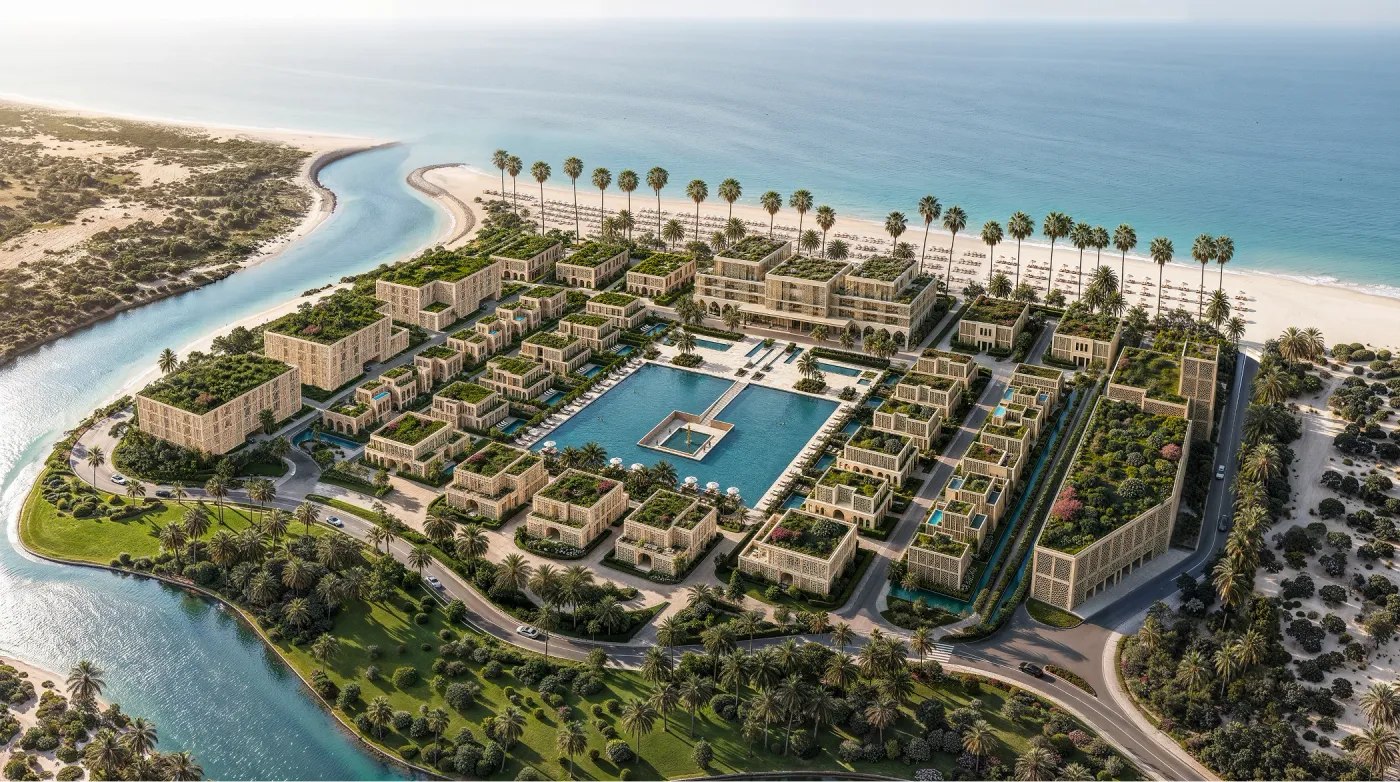
Jebel Sifah é a opção de estilo de vida em resort de marina com um ponto de entrada mais acessível do que as comunidades principais da capital. É desenvolvido pela Muriya – uma joint venture entre Omran e Orascom Development – a mesma incorporadora principal experiente por trás de Hawana Salalah (Optimo Property). Situado na costa ao sul de Mascate, oferece vida em marina, praias e comodidades de resort sem o preço de uma cidade capital.
Em termos de preço de entrada, Jebel Sifah é citado junto com Hawana Salalah como começando em torno de OMR 45,000 a 70,000, o que o torna uma das maneiras mais acessíveis para um comprador estrangeiro garantir o título de propriedade plena (freehold) em um ITC com um verdadeiro estilo de vida de resort (Optimo Property). Como em todos os ITCs de resorts, a demanda é sazonal e impulsionada pelo turismo, então uma estratégia de aluguel de curta temporada depende muito dos padrões de ocupação e das regras de locação da comunidade. Jebel Sifah é uma das áreas verificadas em Omã da Palmera – veja o que está disponível atualmente na página de imóveis em Omã.
Hawana Salalah: o ITC costeiro impulsionado pelo turismo em Dhofar
Hawana Salalah é a aposta costeira de Omã fora de Mascate e um dos maiores ITCs do país. Assim como Jebel Sifah, é desenvolvido pela Muriya (a joint venture Omran-Orascom), e está situado em Dhofar, a governadoria sul famosa por sua temporada de monções Khareef, que atrai turistas regionais em grande número a cada verão (Optimo Property). Esse aumento sazonal do turismo é o núcleo da tese de aluguel de Hawana.
O vento macroeconômico favorável aqui é nacional: Omã tem como meta 11.7 milhões de turistas anualmente até 2040, e a distinta temporada Khareef de Dhofar dá a Salalah um padrão de demanda que complementa o mercado anual de Mascate (Sands of Wealth). Com preços de entrada na mesma faixa de OMR 45,000-70,000 de Jebel Sifah, Hawana atende ao investidor focado em valor que aposta no crescimento do turismo de Salalah em vez da estabilidade da capital (Optimo Property). A sazonalidade é uma faca de dois gumes: a demanda de pico no Khareef é forte, mas a ocupação na baixa temporada é menor, portanto, modele sua rentabilidade de aluguel ao longo do ano inteiro, não apenas no pico de verão. Hawana Salalah está entre as áreas verificadas em Omã da Palmera nas listagens de Omã.
Adequando cada ITC aos perfis de investidores
Juntando tudo, veja como os principais ITCs se alinham aos objetivos de compra mais comuns – e uma expectativa realista de rentabilidade. Lembre-se de que as rentabilidades em Omã variam muito conforme a fonte e a estratégia: apartamentos e villas bem localizados são citados na faixa de 6-8% no geral (Optimo Property), com aluguéis de curta temporada citados em 5-10% bruto e de longo prazo em 4-8% (DXBOffPlan). Trate-os como faixas atribuídas, não garantias – os retornos reais dependem dos regulamentos do ITC específico, se o aluguel de curta temporada é permitido, taxas de condomínio (service charge) e custos de gestão.
| Objetivo do investidor | ITC(s) ideal(is) | Por quê | Faixa de rentabilidade indicativa* |
|---|---|---|---|
| Prestígio de marca + residência | AIDA | Marcas Trump/Marriott, propriedade plena (freehold), elegibilidade total para residência em ITC | 4-8% aluguel longo prazo (atribuído) |
| Estilo de vida comprovado + demanda por aluguel | Al Mouj Muscat | Comunidade consolidada de marina/golfe, melhor histórico de aluguel curta temporada em Mascate | 5-10% aluguel curta temporada (atribuído)* |
| Luxo boutique perto da capital | Muscat Bay | Inquilinos premium, contratos corporativos, forte revenda | ~4-5% villa (atribuído) |
| Crescimento de longo prazo | Yiti, Sultan Haitham City | Construção de plano diretor, ângulo de sustentabilidade, potencial de entrada antecipada | Liderado por valorização do capital |
| Estilo de vida de resort com bom custo-benefício | Jebel Sifah | Vida em marina, entrada acessível OMR 45,000-70,000 | Sazonal / impulsionado pelo turismo |
| Potencial turístico de Salalah | Hawana Salalah | Maior ITC de Dhofar, demanda na temporada Khareef, entrada baixa | Sazonal / impulsionado pelo turismo |
*As rentabilidades de aluguel de curta temporada aplicam-se apenas onde os regulamentos da comunidade permitem o aluguel de curto prazo – o que não é garantido em todos os ITCs. Confirme as regras de aluguel de curta temporada de cada comunidade antes de presumir uma renda via Airbnb.
Dois pontos transversais se aplicam a todos os seis. Primeiro, possuir um imóvel em qualquer ITC designado no valor de OMR 200,000 ou mais qualifica você para a residência para investidores (Golden Visa) de 10 anos relançada por Omã, que não exige estadia mínima e foi relançada em 31 de agosto de 2025 – um benefício significativo, independentemente da comunidade que você escolher (Oman Golden Visa). Segundo, sobre impostos: Omã não cobra imposto anual sobre imóveis nem imposto sobre ganhos de capital para pessoas físicas atualmente, mas não é "0% para sempre" – Omã promulgou seu primeiro imposto de renda de pessoa física via Decreto Real 56/2025, uma alíquota fixa de 5% sobre a renda tributável anual acima de OMR 42,000, com vigência a partir de 1º de janeiro de 2028, e a renda de aluguel deverá ser incluída (EY; KPMG). Cerca de 99% dos residentes ficam abaixo desse limite, mas investidores de alta renda devem considerar isso em um modelo de longo prazo.
Escolher o ITC certo é, em última análise, adequar um destino ao seu objetivo e, em seguida, verificar as especificidades no local. A Palmera Elite Real Estate Brokerage LLC comercializa imóveis na planta e residências de marca nos principais ITCs de Omã – AIDA, Muscat Bay, Yiti, Jebel Sifah, Hawana Salalah, Sultan Haitham City e Shatti Al Qurum. Se você deseja uma lista personalizada adequada ao seu orçamento, objetivos de residência e expectativas de rentabilidade, entre em contato com a equipe pelo e-mail team@palmera.realestate, navegue pelos imóveis em Omã atuais, explore as incorporadoras por trás de cada ITC ou comece pelo hub de investimentos em Omã principal.
Perguntas frequentes
Qual ITC de Omã é melhor para valorização do capital?
Para um potencial puro de valorização do capital, os projetos de plano diretor e sustentabilidade – Yiti (um desenvolvimento costeiro focado em ecologia de ~USD 1 bilhão) e Sultan Haitham City (um dos grandes planos diretores que aceleram a oferta na área de Mascate) – oferecem o potencial de entrada antecipada que vem com a compra antes de um desenvolvimento amadurecer totalmente (Optimo Property; Sands of Wealth). Destinos de marca como AIDA também carregam potencial de crescimento impulsionado pela demanda por residências de prestígio. O crescimento nunca é garantido, portanto, alinhe qualquer escolha com a verificação do inventário e preços atuais.
Onde posso comprar uma residência de marca em Omã?
AIDA é o principal ITC de residências de marca de Omã, unindo DarGlobal e OMRAN a marcas globais, incluindo a Trump Organization e a Marriott – as Marriott Residences no AIDA compreendem 244 residências em duas torres, com conclusão (da obra) prevista para o quarto trimestre de 2027 (DarGlobal; TOPHOTELNEWS). Muscat Bay, lar do Luma Residence, é outra comunidade premium de marca perto da capital (Travels Dubai). Como ambos estão dentro de ITCs designados, suas residências de marca possuem propriedade plena (freehold) estrangeira (BrandedResidences).
Qual ITC atende a um comprador de casa de férias vs um investidor puro?
Compradores de casa de férias geralmente se inclinam para os ITCs de resorts – Jebel Sifah para vida em resort de marina ao sul de Mascate, ou Hawana Salalah para o estilo de vida de praia e Khareef de Dhofar – ambos com pontos de entrada acessíveis em torno de OMR 45,000-70,000 (Optimo Property). Investidores puros focados na demanda de inquilinos e liquidez de revenda tendem a preferir as comunidades consolidadas da capital, como Al Mouj Muscat, o melhor desempenho em aluguel de curta temporada na cidade (Oman Property Investment). Muitos ITCs atendem a ambos os objetivos, mas o preço de entrada e o perfil de demanda diferem.
Qual é o ITC mais barato para entrar?
Os preços de entrada variam muito. Studios em alguns ITCs são citados com início em torno de OMR 9,000 (~USD 23,000), enquanto os ITCs de resorts costeiros, como Jebel Sifah e Hawana Salalah, são citados com início em torno de OMR 45,000-70,000 (Optimo Property). Estes são níveis de entrada indicativos de pesquisas de mercado, não cotações em tempo real – verifique sempre a disponibilidade e os preços atuais no inventário atual da incorporadora antes de se comprometer.
Salalah é uma boa alternativa a Mascate?
Salalah oferece um perfil de demanda diferente, em vez de um substituto direto. Hawana Salalah, um dos maiores ITCs de Omã, beneficia-se da distinta temporada de monções Khareef de Dhofar, que atrai um forte turismo regional a cada verão – e Omã tem como meta 11.7 milhões de turistas anualmente até 2040, sustentando essa demanda (Sands of Wealth). A contrapartida é a sazonalidade: a ocupação na alta temporada é forte, mas a demanda na baixa temporada é menor do que o mercado anual de Mascate, portanto, modele os retornos ao longo do ano inteiro. Atende a investidores focados em valor que apostam na trajetória turística de Salalah.