






















Imóveis em Propriedade Plena em Omã para Estrangeiros: A Regra dos ITCs Explicada (2026)


Se você é um investidor estrangeiro avaliando a compra de um imóvel em Omã, uma questão importa mais do que qualquer outra: onde um não omani pode, de fato, deter a propriedade plena (freehold)? Esta é a dúvida jurídica mais pesquisada por qualquer comprador que entra neste mercado, e a resposta é precisa, não vaga. Estrangeiros só podem deter o título de propriedade plena (freehold) dentro de Complexos Turísticos Integrados (ITCs) designados, que são comunidades de resorts planejadas pela incorporadora principal e registradas no Ministério da Habitação e Planejamento Urbano. Em qualquer outro lugar, a propriedade para não omanis é restrita ou limitada a um arrendamento de longo prazo (leasehold).
Essa única regra molda todas as estratégias de compra confiáveis no Sultanato. Acerte e você garante um título real e reconhecido internacionalmente, com o direito de vender, arrendar, doar e transmitir o imóvel aos seus herdeiros. Erre, e você corre o risco de realizar uma transação que não poderá ser registrada em seu nome. O cenário jurídico de Omã também está em transição em 2026: uma nova Lei de Regulação Imobiliária foi emitida por meio do Decreto Real 79/2025, e seus regulamentos executivos podem, eventualmente, ampliar a propriedade estrangeira para além dos ITCs. Até que esses regulamentos sejam publicados, a regra da propriedade plena (freehold) nos ITCs permanece como a base estabelecida e segura em torno da qual este guia foi construído. Abaixo, detalhamos o que é um ITC, a diferença entre propriedade plena (freehold) e usufruto, as bases legais, as zonas de ITC verificadas, seus direitos e obrigações, e os mitos que confundem os compradores de primeira viagem.
Índice
- O que é um Complexo Turístico Integrado (ITC)?
- Propriedade plena (freehold) versus usufruto: o que você realmente possui
- A base legal: Decreto Real 12/2006 e Decreto Real 79/2025
- Quais zonas são designadas como ITCs
- Seus direitos como proprietário de propriedade plena (freehold) em um ITC
- Obrigações principais: a regra de construção de 4 anos
- Mitos comuns que compradores estrangeiros acreditam erroneamente
- Como a Palmera ajuda você a comprar propriedade plena (freehold) em ITCs com segurança
O que é um Complexo Turístico Integrado (ITC) e por que ele existe
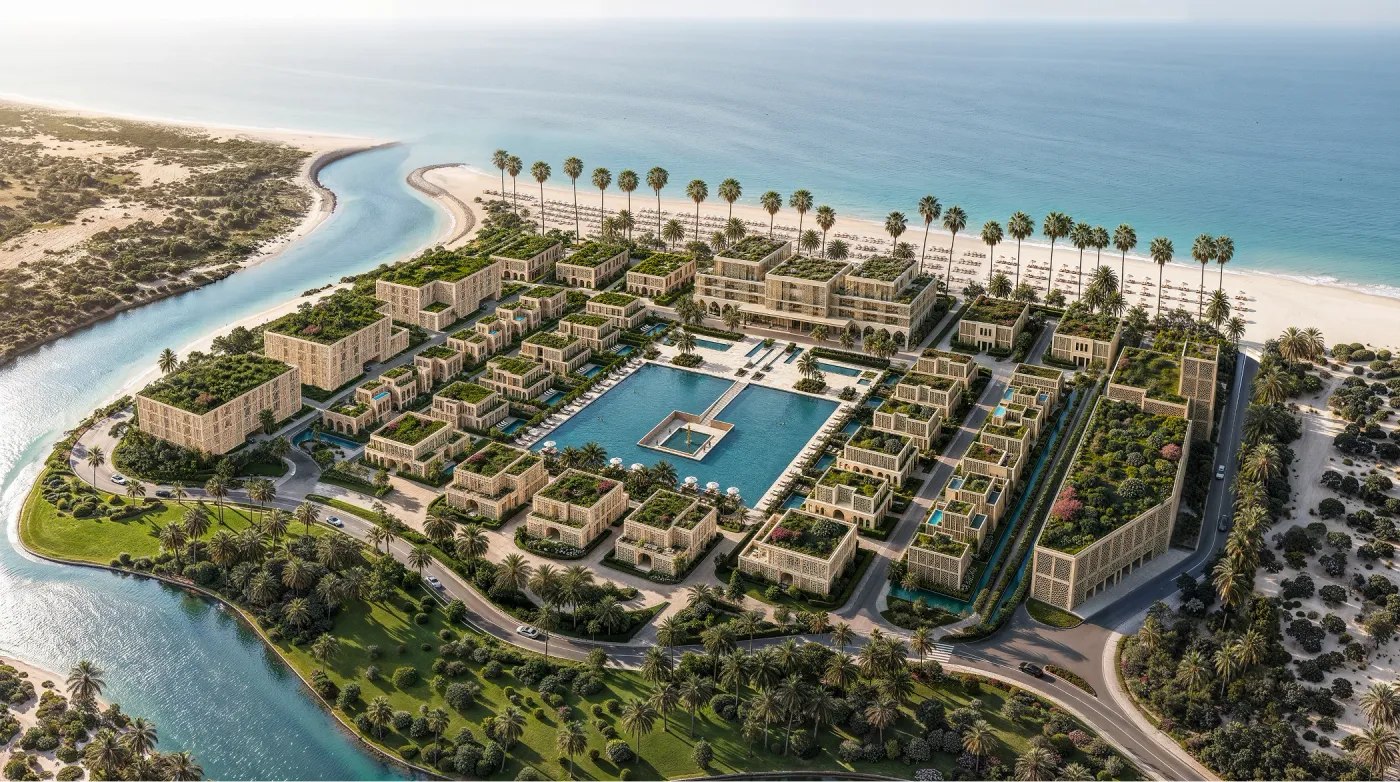
Um Complexo Turístico Integrado é um grande empreendimento planejado pela incorporadora principal que combina imóveis residenciais, hotéis, lazer e varejo em uma única comunidade autossuficiente. Omã criou a estrutura dos ITCs como um instrumento de política deliberado: em vez de abrir todo o país à propriedade imobiliária estrangeira, o governo designou zonas específicas onde não omanis podem comprar integralmente. Isso canaliza o capital internacional para projetos liderados pelo turismo, mantendo o mercado de terras mais amplo reservado aos cidadãos.
Esse modelo atraiu investimentos substanciais. De acordo com o Times of Oman, os investimentos em projetos de ITC em implementação superam OMR 4.3 bilhões, um valor que reflete o quão centrais esses complexos se tornaram para a diversificação econômica do país. Para o comprador estrangeiro, a conclusão prática é simples: um ITC não é apenas um rótulo de marketing, é uma designação legal registrada no Ministério da Habitação e Planejamento Urbano que garante o seu direito à propriedade plena (freehold).
Como a designação é o que importa legalmente, confirmar que um projeto está dentro de um ITC reconhecido é o primeiro passo de due diligence em qualquer compra. Um empreendimento deslumbrante fora de uma zona de ITC simplesmente não oferece os mesmos direitos de propriedade para um não omani, independentemente de como seja comercializado.
Propriedade plena (freehold) versus usufruto: o que você realmente possui em Omã
A distinção mais importante na lei imobiliária de Omã é entre propriedade plena (freehold) e usufruto, e confundir os dois é um erro caro. Dentro de um ITC designado, um estrangeiro pode deter a propriedade plena (freehold), ou seja, a propriedade total e permanente do imóvel. Fora dos ITCs, o cenário é diferente. Sob a Decisão Ministerial 357/2020, estrangeiros podem deter o usufruto, um arrendamento de longo prazo (leasehold) em vez de propriedade plena, sobre apartamentos em edifícios de uso misto em locais aprovados específicos, conforme documentado pelo guia de propriedade estrangeira da Damas Turk.
O usufruto concede o direito de usar e usufruir de um imóvel por um período definido (arrendamentos de longo prazo podem durar até 99 anos), mas não é o mesmo que possuir o ativo integralmente. A propriedade plena (freehold) dentro de um ITC, por outro lado, é uma propriedade genuína sem prazo de validade. A tabela abaixo resume a diferença prática.
| Característica | Propriedade plena (freehold) em ITC | Usufruto (fora dos ITCs) |
|---|---|---|
| Natureza do título | Propriedade total e permanente | Arrendamento de longo prazo / direito de uso |
| Onde se aplica | Apenas ITCs designados | Locais de uso misto aprovados (Decisão Ministerial 357/2020) |
| Duração típica | Perpétua | Até 99 anos |
| Vender, arrendar, herdar | Sim, direitos plenos | Limitado pelos termos do arrendamento |
| Elegibilidade estrangeira | Sim | Sim, em zonas aprovadas |
Para a maioria dos investidores internacionais que buscam um ativo genuíno e transferível, a propriedade plena (freehold) dentro de um ITC é o caminho que entrega o que compradores em mercados como Dubai reconheceriam como verdadeira propriedade.
A base legal: Decreto Real 12/2006 e o que o Decreto Real 79/2025 pode mudar
A base legal para a propriedade plena (freehold) estrangeira em Omã é o Decreto Real 12/2006, a Lei de Propriedade Imobiliária para ITCs. Conforme explicado pela Al Alawi & Co, é este decreto que permite que não omanis possuam o título de propriedade plena (freehold) dentro de ITCs designados, com a propriedade registrada no Ministério da Habitação e Planejamento Urbano. Esta é a regra fundamental e tem se mantido estável por quase duas décadas.
O desenvolvimento mais recente é o Decreto Real 79/2025, que emitiu uma nova Lei de Regulação Imobiliária. Conforme publicado no decree.om, os regulamentos executivos desta lei devem ser emitidos dentro de um ano após a sua entrada em vigor, e a reforma pode expandir a propriedade plena (freehold) estrangeira para além dos ITCs para unidades vendidas pela incorporadora. Essa é uma mudança potencialmente significativa, mas a ressalva crítica é que ela permanece não verificada na prática até que os regulamentos executivos sejam efetivamente publicados. Até lá, a posição prudente para qualquer comprador é tratar a regra da propriedade plena (freehold) em ITCs como a lei estabelecida e a reforma mais ampla como um desenvolvimento no horizonte, e não como um direito atual.
Em outras palavras: não compre fora de um ITC hoje partindo do pressuposto de que a lei de 2025 já permite que você tenha propriedade plena (freehold) lá. Isso ainda não é possível. Quando os regulamentos forem publicados, as regras podem ser ampliadas, e a Palmera acompanhará isso de perto em nome de seus clientes.
Quais zonas são designadas como ITCs (a lista verificada)
Omã possui uma lista reconhecida de ITCs que abrange Mascate, a costa sul de Dhofar e destinos de resort no caminho. De acordo com a Vista Oman, os principais ITCs reconhecidos incluem Al Mouj Muscat, Muscat Bay, Muscat Hills, Jebel Sifah, AIDA, Hawana Salalah e Yiti. Cada um tem seu próprio caráter, desde o estilo de vida com marina e golfe até residências de marca no topo de falésias, mas todos compartilham a mesma vantagem legal: a propriedade plena (freehold) estrangeira.
| ITC | Localização | Perfil |
|---|---|---|
| AIDA | Mascate | Plano diretor no topo de falésias com residências de marca |
| Muscat Bay | Mascate | Luxo boutique entre uma enseada e as montanhas Al Hajar |
| Al Mouj Muscat | Mascate | Comunidade consolidada com marina, golfe e à beira-mar |
| Yiti | Mascate | Empreendimento costeiro com foco em sustentabilidade |
| Jebel Sifah | Sul de Mascate | Vida em resort com marina |
| Hawana Salalah | Dhofar | ITC costeiro impulsionado pelo turismo no sul |
A Palmera comercializa uma seleção focada dessas comunidades, incluindo AIDA e Muscat Bay, além de Yiti, Jebel Sifah e Hawana Salalah. Você pode conferir a linha completa atual em nossa página de imóveis em Omã. Como a disponibilidade e as designações evoluem, confirme sempre o status de ITC de um projeto específico antes de se comprometer.
Seus direitos como proprietário de propriedade plena (freehold) em um ITC (vender, arrendar, herdar)
A propriedade plena (freehold) em ITC não é uma forma diluída de propriedade. Conforme estabelecido em uma comparação entre EAU e Omã pela DXB Off Plan, a propriedade plena (freehold) em ITC garante direitos plenos de vender, arrendar, doar e legar o imóvel aos herdeiros. Esse é o pacote completo de direitos de propriedade que um investidor internacional espera.
Na prática, isso significa que você pode revender para outro comprador (omani ou estrangeiro, dentro da estrutura do ITC), alugar o imóvel para obter renda, transferi-lo como doação ou passá-lo aos seus filhos por herança. Vale ressaltar separadamente que o aluguel de curto prazo ou no estilo Airbnb não é automaticamente permitido em todos os ITCs, pois muitos regulamentos da comunidade (condomínio) o restringem; portanto, qualquer plano de rentabilidade de aluguel deve ser verificado de acordo com as regras da comunidade específica. Mas os direitos centrais de propriedade, incluindo o direito de arrendar em termos padrão e de herdar, estão intactos e legalmente protegidos.
É também por isso que a distinção entre propriedade plena (freehold) e usufruto importa tanto na prática: apenas a propriedade plena (freehold) oferece esse pacote completo e transferível sem as restrições de um prazo de arrendamento.
Obrigações principais: a regra de construção de 4 anos em terrenos não desenvolvidos
A propriedade em um ITC traz uma obrigação que pega alguns compradores de surpresa, particularmente aqueles que compram terrenos em vez de uma unidade pronta para morar. De acordo com a Al Alawi & Co, quando um terreno em ITC é comprado sem desenvolvimento, o proprietário deve iniciar a construção dentro de quatro anos após o registro do título de propriedade, caso contrário, o terreno pode reverter para o Estado.
Para a maioria dos investidores estrangeiros, isso não é uma preocupação, porque a compra típica é de um apartamento ou villa pronto para morar, ou uma unidade na planta sendo construída pela incorporadora sob um plano de pagamento. Nesses casos, a incorporadora cuida da construção e a regra de quatro anos não é acionada para o comprador. A regra importa principalmente se você adquirir um lote com infraestrutura para construir por conta própria, caso em que deve considerar o prazo de início da construção em seu cronograma desde o início.
Mitos comuns que compradores estrangeiros acreditam erroneamente sobre a propriedade em Omã
Vários equívocos persistentes circulam online, e alguns vêm de fontes que, de outra forma, parecem reputáveis. Esclarecê-los protege você de tomar decisões com base em informações incorretas.
Mito 1: "A propriedade estrangeira em Omã é apenas um arrendamento de longo prazo (leasehold) de 99 anos, mesmo dentro dos ITCs." Isso é incorreto para imóveis em ITC. Dentro de um ITC designado, a propriedade estrangeira é uma propriedade plena (freehold) genuína com título completo, não um arrendamento de 99 anos. O número de 99 anos refere-se a acordos de usufruto fora dos ITCs, não à propriedade plena (freehold) em ITCs. Conforme as fontes acima confirmam, a propriedade plena (freehold) em ITCs garante direitos plenos de vender, arrendar, doar e herdar.
Mito 2: "A lei de 2025 significa que os estrangeiros agora podem comprar em qualquer lugar de Omã." Ainda não. O Decreto Real 79/2025 foi emitido, mas seus regulamentos executivos continuam pendentes, e até que sejam publicados, a regra estabelecida de propriedade plena (freehold) em ITCs permanece válida. Trate qualquer afirmação de que você já pode comprar propriedade plena (freehold) fora de um ITC como provisória.
Mito 3: "Um estrangeiro só pode comprar um apartamento, nunca possuir um terreno." Na realidade, dentro dos ITCs, os estrangeiros podem possuir villas e lotes de terra em propriedade plena (freehold), não apenas apartamentos. A rota de propriedade de terrenos simplesmente vem com a obrigação de construção de quatro anos descrita acima.
Mito 4: "Isento de impostos para sempre." Omã não tem imposto de renda pessoal hoje, o que é uma vantagem genuína, mas isso está mudando. Omã legislou um imposto de renda pessoal de 5% sobre a parcela da renda anual acima de OMR 42,000, com vigência a partir de 1º de janeiro de 2028. Portanto, embora o ambiente atual seja atraente, "0% de impostos para sempre" não é preciso e não deve ser um fator em um plano de longo prazo.
Como a Palmera ajuda compradores estrangeiros a garantir a propriedade plena (freehold) em ITCs com segurança
Comprar propriedade plena (freehold) em Omã é direto quando você parte da premissa correta (possuir dentro de um ITC designado) e verifica o status legal de cada projeto antes de se comprometer. Essa verificação é exatamente onde uma corretora licenciada e especialista ganha seu lugar. A Palmera Elite Real Estate Brokerage LLC foca no mercado de ITCs de Omã e ajuda compradores internacionais a confirmar que um projeto está genuinamente dentro de um complexo designado, entender se estão adquirindo propriedade plena (freehold) ou usufruto, revisar as obrigações anexadas ao título de propriedade e registrar a propriedade corretamente no Ministério da Habitação e Planejamento Urbano.
Atuamos nos ITCs principais do país, desde residências de marca no topo de falésias no AIDA até o estilo de vida boutique à beira-mar no Muscat Bay e as comunidades de resort de Yiti, Jebel Sifah e Hawana Salalah. Você pode explorar as oportunidades atuais por meio de nossas páginas de imóveis em Omã e incorporadoras, ou começar em nosso hub de Omã para uma visão geral do mercado.
Se você deseja uma resposta clara e embasada sobre onde e como pode ter propriedade plena (freehold) em Omã, nossa equipe terá prazer em ajudar. Entre em contato pelo team@palmera.realestate e nós o guiaremos pelas opções de ITC que se encaixam em seus objetivos, sem pressão e sem promessas inventadas, apenas as regras verificadas e os projetos que correspondem a elas.
Um estrangeiro pode possuir um terreno integralmente em Omã, ou apenas um apartamento?
Dentro de um Complexo Turístico Integrado (ITC) designado, os estrangeiros podem possuir imóveis em propriedade plena (freehold), incluindo villas e lotes de terra, não apenas apartamentos, sob o Decreto Real 12/2006. A condição principal para terrenos não desenvolvidos é que o proprietário deve iniciar a construção dentro de quatro anos após o registro do título de propriedade, caso contrário, o terreno pode reverter para o Estado. Fora dos ITCs, os direitos estrangeiros são geralmente limitados ao usufruto (um arrendamento de longo prazo) em apartamentos de uso misto aprovados sob a Decisão Ministerial 357/2020.
A propriedade em ITC é propriedade plena (freehold) real ou apenas um arrendamento de 99 anos?
É propriedade plena (freehold) real. Dentro de um ITC designado, a propriedade estrangeira é um título total e permanente com o direito de vender, arrendar, doar e legar o imóvel aos herdeiros, conforme estabelecido pelo Decreto Real 12/2006. O número de 99 anos que algumas fontes citam refere-se a acordos de usufruto fora dos ITCs, não à propriedade plena (freehold) em ITCs, portanto, não confunda os dois.
Posso possuir um imóvel em Mascate fora de um ITC como estrangeiro?
Como regra, não, não como propriedade plena (freehold). A estrutura estabelecida restringe a propriedade plena (freehold) estrangeira aos ITCs designados. Fora de um ITC, um estrangeiro pode deter o usufruto (um arrendamento de longo prazo, não propriedade plena) em apartamentos em locais específicos aprovados de uso misto sob a Decisão Ministerial 357/2020. O Decreto Real 79/2025 pode eventualmente ampliar a propriedade estrangeira, mas seus regulamentos executivos ainda estão pendentes, portanto, a regra restrita aos ITCs permanece como a posição segura por enquanto.
O Decreto Real 79/2025 me permitirá comprar em qualquer lugar de Omã?
Ainda não, e possivelmente não em qualquer lugar. O Decreto Real 79/2025 emitiu uma nova Lei de Regulação Imobiliária, e seus regulamentos executivos devem ser emitidos dentro de um ano após a entrada em vigor. Esses regulamentos podem expandir a propriedade plena (freehold) estrangeira para além dos ITCs para unidades vendidas pela incorporadora, mas isso não é verificado na prática até que os regulamentos sejam efetivamente publicados. Até lá, trate a propriedade plena (freehold) em ITCs como a regra estabelecida e qualquer afirmação mais ampla como provisória.
O que acontece com o meu imóvel se eu quiser vendê-lo ou passá-lo para os meus filhos?
A propriedade plena (freehold) em ITCs garante direitos plenos de vender, arrendar, doar e legar o imóvel aos seus herdeiros. Isso significa que você pode revender o imóvel dentro da estrutura do ITC ou passá-lo por herança com o título intacto. Omã também não impõe imposto sobre herança de imóveis, portanto, transferi-lo para a família não gera cobrança de impostos.